A Summary View of the Rights
of British America -
by Thomas Jefferson - 1774

"A Summary View of
the Rights of
British America"
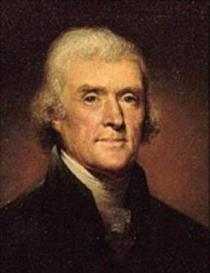
A Summary View of the Rights of British America was written by Thomas Jefferson for the Virginia Convention's delegates to the First Continental Congress in 1774. It eloquently enumerates the abuses suffered by the American colonists at the hand of King George III and the British Parliament.
This document was read by many members of the Continental Congress over the next year and a half. When the Second Continental Congress met in 1776 and decided to declare their independence from Great Britain, they asked Thomas Jefferson to write it, partly because of the eloquent way he states his opinions in A Summary View of the Rights of British America. The Declaration of Independence was the result.

A Summary View of the Rights of British America
Resolved, that it be an instruction to the said deputies, when assembled in general congress with the deputies from the other states of British America, to propose to the said congress that an humble and dutiful address be presented to his majesty, begging leave to lay before him, as chief magistrate of the British empire, the united complaints of his majesty's subjects in America; complaints which are excited by many unwarrantable encroachments and usurpations, attempted to be made by the legislature of one part of the empire, upon those rights which God and the laws have given equally and independently to all. To represent to his majesty that these his states have often individually made humble application to his imperial throne to obtain, through its intervention, some redress of their injured rights, to none of which was ever even an answer condescended; humbly to hope that this their joint address, penned in the language of truth, and divested of those expressions of servility which would persuade his majesty that we are asking favours, and not rights, shall obtain from his majesty a more respectful acceptance. And this his majesty will think we have reason to expect when he reflects that he is no more than the chief officer of the people, appointed by the laws, and circumscribed with definite powers, to assist in working the great machine of government, erected for their use, and consequently subject to their superintendance. And in order that these our rights, as well as the invasions of them, may be laid more fully before his majesty, to take a view of them from the origin and first settlement of these countries.
To remind him that our ancestors, before their emigration to America, were the free inhabitants of the British dominions in Europe, and possessed a right which nature has given to all men, of departing from the country in which chance, not choice, has placed them, of going in quest of new habitations, and of there establishing new societies, under such laws and regulations as to them shall seem most likely to promote public happiness. That their Saxon ancestors had, under this universal law, in like manner left their native wilds and woods in the north of Europe, had possessed themselves of the island of Britain, then less charged with inhabitants, and had established there that system of laws which has so long been the glory and protection of that country. Nor was ever any claim of superiority or dependence asserted over them by that mother country from which they had migrated; and were such a claim made, it is believed that his majesty's subjects in Great Britain have too firm a feeling of the rights derived to them from their ancestors, to bow down the sovereignty of their state before such visionary pretensions. And it is thought that no circumstance has occurred to distinguish materially the British from the Saxon emigration. America was conquered, and her settlements made, and firmly established, at the expence of individuals, and not of the British public. Their own blood was spilt in acquiring lands for their settlement, their own fortunes expended in making that settlement effectual; for themselves they fought, for themselves they conquered, and for themselves alone they have right to hold. Not a shilling was ever issued from the public treasures of his majesty, or his ancestors, for their assistance, till of very late times, after the colonies had become established on a firm and permanent footing. That then, indeed, having become valuable to Great Britain for her commercial purposes, his parliament was pleased to lend them assistance against an enemy, who would fain have drawn to herself the benefits of their commerce, to the great aggrandizement of herself, and danger of Great Britain. Such assistance, and in such circumstances, they had often before given to Portugal, and other allied states, with whom they carry on a commercial intercourse; yet these states never supposed, that by calling in her aid, they thereby submitted themselves to her sovereignty. Had such terms been proposed, they would have rejected them with disdain, and trusted for better to the moderation of their enemies, or to a vigorous exertion of their own force. We do not, however, mean to under-rate those aids, which to us were doubtless valuable, on whatever principles granted; but we would shew that they cannot give a title to that authority which the British parliament would arrogate over us, and that they may amply be repaid by our giving to the inhabitants of Great Britain such exclusive privileges in trade as may be advantageous to them, and at the same time not too restrictive to ourselves. That settlements having been thus effected in the wilds of America, the emigrants thought proper to adopt that system of laws under which they had hitherto lived in the mother country, and to continue their union with her by submitting themselves to the same common sovereign, who was thereby made the central link connecting the several parts of the empire thus newly multiplied.

But that not long were they permitted, however far they thought themselves removed from the hand of oppression, to hold undisturbed the rights thus acquired, at the hazard of their lives, and loss of their fortunes. A family of princes was then on the British throne, whose treasonable crimes against their people brought on them afterwards the exertion of those sacred and sovereign rights of punishment reserved in the hands of the people for cases of extreme necessity, and judged by the constitution unsafe to be delegated to any other judicature. While every day brought forth some new and unjustifiable exertion of power over their subjects on that side the water, it was not to be expected that those here, much less able at that time to oppose the designs of despotism, should be exempted from injury.
Accordingly that country, which had been acquired by the lives, the labours, and the fortunes, of individual adventurers, was by these princes, at several times, parted out and distributed among the favourites and followers of their fortunes, and, by an assumed right of the crown alone, were erected into distinct and independent governments; a measure which it is believed his majesty's prudence and understanding would prevent him from imitating at this day, as no exercise of such a power, of dividing and dismembering a country, has ever occurred in his majesty's realm of England, though now of very antient standing; nor could it be justified or acquiesced under there, or in any other part of his majesty's empire.
That the exercise of a free trade with all parts of the world, possessed by the American colonists, as of natural right, and which no law of their own had taken away or abridged, was next the object of unjust encroachment. Some of the colonies having thought proper to continue the administration of their government in the name and under the authority of his majesty king Charles the first, whom, notwithstanding his late deposition by the commonwealth of England, they continued in the sovereignty of their state; the parliament for the commonwealth took the same in high offence, and assumed upon themselves the power of prohibiting their trade with all other parts of the world, except the island of Great Britain. This arbitrary act, however, they soon recalled, and by solemn treaty, entered into on the 12th day of March, 1651, between the said commonwealth by their commissioners, and the colony of Virginia by their house of burgesses, it was expressly stipulated, by the 8th article of the said treaty, that they should have "free trade as the people of England do enjoy to all places and with all nations, according to the laws of that commonwealth." But that, upon the restoration of his majesty king Charles the second, their rights of free commerce fell once more a victim to arbitrary power; and by several acts of his reign, as well as of some of his successors, the trade of the colonies was laid under such restrictions, as shew what hopes they might form from the justice of a British parliament, were its uncontrouled power admitted over these states. History has informed us that bodies of men, as well as individuals, are susceptible of the spirit of tyranny. A view of these acts of parliament for regulation, as it has been affectedly called, of the American trade, if all other evidence were removed out of the case, would undeniably evince the truth of this observation. Besides the duties they impose on our articles of export and import, they prohibit our going to any markets northward of Cape Finesterre, in the kingdom of Spain, for the sale of commodities which Great Britain will not take from us, and for the purchase of others, with which she cannot supply us, and that for no other than the arbitrary purposes of purchasing for themselves, by a sacrifice of our rights and interests, certain privileges in their commerce with an allied state, who in confidence that their exclusive trade with America will be continued, while the principles and power of the British parliament be the same, have indulged themselves in every exorbitance which their avarice could dictate, or our necessities extort; have raised their commodities, called for in America, to the double and treble of what they sold for before such exclusive privileges were given them, and of what better commodities of the same kind would cost us elsewhere, and at the same time give us much less for what we carry thither than might be had at more convenient ports. That these acts prohibit us from carrying in quest of other purchasers the surplus of our tobaccoes remaining after the consumption of Great Britain is supplied; so that we must leave them with the British merchant for whatever he will please to allow us, to be by him reshipped to foreign markets, where he will reap the benefits of making sale of them for full value. That to heighten still the idea of parliamentary justice, and to shew with what moderation they are like to exercise power, where themselves are to feel no part of its weight, we take leave to mention to his majesty certain other acts of British parliament, by which they would prohibit us from manufacturing for our own use the articles we raise on our own lands with our own labour. By an act passed in the 5th Year of the reign of his late majesty king George the second, an American subject is forbidden to make a hat for himself of the fur which he has taken perhaps on his own soil; an instance of despotism to which no parallel can be produced in the most arbitrary ages of British history. By one other act, passed in the 23d year of the same reign, the iron which we make we are forbidden to manufacture, and heavy as that article is, and necessary in every branch of husbandry, besides commission and insurance, we are to pay freight for it to Great Britain, and freight for it back again, for the purpose of supporting not men, but machines, in the island of Great Britain. In the same spirit of equal and impartial legislation is to be viewed the act of parliament, passed in the 5th year of the same reign, by which American lands are made subject to the demands of British creditors, while their own lands were still continued unanswerable for their debts; from which one of these conclusions must necessarily follow, either that justice is not the same in America as in Britain, or else that the British parliament pay less regard to it here than there. But that we do not point out to his majesty the injustice of these acts, with intent to rest on that principle the cause of their nullity; but to shew that experience confirms the propriety of those political principles which exempt us from the jurisdiction of the British parliament. The true ground on which we declare these acts void is, that the British parliament has no right to exercise authority over us.
That these exercises of usurped power have not been confined to instances alone, in which themselves were interested, but they have also intermeddled with the regulation of the internal affairs of the colonies. The act of the 9th of Anne for establishing a post office in America seems to have had little connection with British convenience, except that of accommodating his majesty's ministers and favourites with the sale of a lucrative and easy office.
That thus have we hastened through the reigns which preceded his majesty's, during which the violations of our right were less alarming, because repeated at more distant intervals than that rapid and bold succession of injuries which is likely to distinguish the present from all other periods of American story. Scarcely have our minds been able to emerge from the astonishment into which one stroke of parliamentary thunder has involved us, before another more heavy, and more alarming, is fallen on us. Single acts of tyranny may be ascribed to the accidental opinion of a day; but a series of oppressions, begun at a distinguished period, and pursued unalterably through every change of ministers, too plainly prove a deliberate and systematical plan of reducing us to slavery.
That the act passed in the 4th year of his majesty's reign, intitled "An act for granting certain duties in the British colonies and plantations in America, &c."
One other act, passed in the 5th year of his reign, intitled "An act for granting and applying certain stamp duties and other duties in the British colonies and plantations in America, &c."
One other act, passed in the 6th year of his reign, intitled "An act for the better securing the dependency of his majesty's dominions in America upon the crown and parliament of Great Britain;" and one other act, passed in the 7th year of his reign, intitled "An act for granting duties on paper, tea, &c." form that connected chain of parliamentary usurpation, which has already been the subject of frequent applications to his majesty, and the houses of lords and commons of Great Britain; and no answers having yet been condescended to any of these, we shall not trouble his majesty with a repetition of the matters they contained.
But that one other act, passed in the same 7th year of the reign, having been a peculiar attempt, must ever require peculiar mention; it is intitled "An act for suspending the legislature of New York." One free and independent legislature hereby takes upon itself to suspend the powers of another, free and independent as itself; thus exhibiting a phoenomenon unknown in nature, the creator and creature of its own power. Not only the principles of common sense, but the common feelings of human nature, must be surrendered up before his majesty's subjects here can be persuaded to believe that they hold their political existence at the will of a British parliament. Shall these governments be dissolved, their property annihilated, and their people reduced to a state of nature, at the imperious breath of a body of men, whom they never saw, in whom they never confided, and over whom they have no powers of punishment or removal, let their crimes against the American public be ever so great? Can any one reason be assigned why 160,000 electors in the island of Great Britain should give law to four millions in the states of America, every individual of whom is equal to every individual of them, in virtue, in understanding, and in bodily strength? Were this to be admitted, instead of being a free people, as we have hitherto supposed, and mean to continue ourselves, we should suddenly be found the slaves, not of one, but of 160,000 tyrants, distinguished too from all others by this singular circumstance, that they are removed from the reach of fear, the only restraining motive which may hold the hand of a tyrant.
That by "an act to discontinue in such manner and for such time as are therein mentioned the landing and discharging, lading or shipping, of goods, wares, and merchandize, at the town and within the harbour of Boston, in the province of Massachusetts Bay, in North America," which was passed at the last session of British parliament; a large and populous town, whose trade was their sole subsistence, was deprived of that trade, and involved in utter ruin. Let us for a while suppose the question of right suspended, in order to examine this act on principles of justice: An act of parliament had been passed imposing duties on teas, to be paid in America, against which act the Americans had protested as inauthoritative. The East India company, who till that time had never sent a pound of tea to America on their own account, step forth on that occasion the assertors of parliamentary right, and send hither many ship loads of that obnoxious commodity. The masters of their several vessels, however, on their arrival in America, wisely attended to admonition, and returned with their cargoes. In the province of New England alone the remonstrances of the people were disregarded, and a compliance, after being many days waited for, was flatly refused. Whether in this the master of the vessel was governed by his obstinancy, or his instructions, let those who know, say. There are extraordinary situations which require extraordinary interposition. An exasperated people, who feel that they possess power, are not easily restrained within limits strictly regular. A number of them assembled in the town of Boston, threw the tea into the ocean, and dispersed without doing any other act of violence. If in this they did wrong, they were known and were amenable to the laws of the land, against which it could not be objected that they had ever, in any instance, been obstructed or diverted from their regular course in favour of popular offenders. They should therefore not have been distrusted on this occasion. But that ill fated colony had formerly been bold in their enmities against the house of Stuart, and were now devoted to ruin by that unseen hand which governs the momentous affairs of this great empire. On the partial representations of a few worthless ministerial dependents, whose constant office it has been to keep that government embroiled, and who, by their treacheries, hope to obtain the dignity of the British knighthood, without calling for a party accused, without asking a proof, without attempting a distinction between the guilty and the innocent, the whole of that antient and wealthy town is in a moment reduced from opulence to beggary. Men who had spent their lives in extending the British commerce, who had invested in that place the wealth their honest endeavours had merited, found themselves and their families thrown at once on the world for subsistence by its charities. Not the hundredth part of the inhabitants of that town had been concerned in the act complained of; many of them were in Great Britain and in other parts beyond sea; yet all were involved in one indiscriminate ruin, by a new executive power, unheard of till then, that of a British parliament. A property, of the value of many millions of money, was sacrificed to revenge, not repay, the loss of a few thousands. This is administering justice with a heavy hand indeed! and when is this tempest to be arrested in its course? Two wharfs are to be opened again when his majesty shall think proper. The residue which lined the extensive shores of the bay of Boston are forever interdicted the exercise of commerce. This little exception seems to have been thrown in for no other purpose than that of setting a precedent for investing his majesty with legislative powers. If the pulse of his people shall beat calmly under this experiment, another and another will be tried, till the measure of despotism be filled up. It would be an insult on common sense to pretend that this exception was made in order to restore its commerce to that great town. The trade which cannot be received at two wharfs alone must of necessity be transferred to some other place; to which it will soon be followed by that of the two wharfs. Considered in this light, it would be an insolent and cruel mockery at the annihilation of the town of Boston.
By the act for the suppression of riots and tumults in the town of Boston, passed also in the last session of parliament, a murder committed there is, if the governor pleases, to be tried in the court of King's Bench, in the island of Great Britain, by a jury of Middlesex. The witnesses, too, on receipt of such a sum as the governor shall think it reasonable for them to expend, are to enter into recognizance to appear at the trial. This is, in other words, taxing them to the amount of their recognizance, and that amount may be whatever a governor pleases; for who does his majesty think can be prevailed on to cross the Atlantic for the sole purpose of bearing evidence to a fact? His expences are to be borne, indeed, as they shall be estimated by a governor; but who are to feed the wife and children whom he leaves behind, and who have had no other subsistence but his daily labour? Those epidemical disorders, too, so terrible in a foreign climate, is the cure of them to be estimated among the articles of expence, and their danger to be warded off by the almighty power of parliament? And the wretched criminal, if he happen to have offended on the American side, stripped of his privilege of trial by peers of his vicinage, removed from the place where alone full evidence could be obtained, without money, without counsel, without friends, without exculpatory proof, is tried before judges predetermined to condemn. The cowards who would suffer a countryman to be torn from the bowels of their society, in order to be thus offered a sacrifice to parliamentary tyranny, would merit that everlasting infamy now fixed on the authors of the act! A clause for a similar purpose had been introduced into an act, passed in the 12th year of his majesty's reign, intitled "An act for the better securing and preserving his majesty's dockyards, magazines, ships, ammunition, and stores;" against which, as meriting the same censures, the several colonies have already protested.
That these are the acts of power, assumed by a body of men, foreign to our constitutions, and unacknowledged by our laws, against which we do, on behalf of the inhabitants of British America, enter this our solemn and determined protest; and we do earnestly entreat his majesty, as yet the only mediatory power between the several states of the British empire, to recommend to his parliament of Great Britain the total revocation of these acts, which, however nugatory they be, may yet prove the cause of further discontents and jealousies among us.
That we next proceed to consider the conduct of his majesty, as holding the executive powers of the laws of these states, and mark out his deviations from the line of duty: By the constitution of Great Britain, as well as of the several American states, his majesty possesses the power of refusing to pass into a law any bill which has already passed the other two branches of legislature. His majesty, however, and his ancestors, conscious of the impropriety of opposing their single opinion to the united wisdom of two houses of parliament, while their proceedings were unbiassed by interested principles, for several ages past have modestly declined the exercise of this power in that part of his empire called Great Britain. But by change of circumstances, other principles than those of justice simply have obtained an influence on their determinations; the addition of new states to the British empire has produced an addition of new, and sometimes opposite interests. It is now, therefore, the great office of his majesty, to resume the exercise of his negative power, and to prevent the passage of laws by any one legislature of the empire, which might bear injuriously on the rights and interests of another. Yet this will not excuse the wanton exercise of this power which we have seen his majesty practise on the laws of the American legislatures. For the most trifling reasons, and sometimes for no conceivable reason at all, his majesty has rejected laws of the most salutary tendency. The abolition of domestic slavery is the great object of desire in those colonies, where it was unhappily introduced in their infant state. But previous to the enfranchisement of the slaves we have, it is necessary to exclude all further importations from Africa; yet our repeated attempts to effect this by prohibitions, and by imposing duties which might amount to a prohibition, have been hitherto defeated by his majesty's negative: Thus preferring the immediate advantages of a few African corsairs to the lasting interests of the American states, and to the rights of human nature, deeply wounded by this infamous practice. Nay, the single interposition of an interested individual against a law was scarcely ever known to fail of success, though in the opposite scale were placed the interests of a whole country. That this is so shameful an abuse of a power trusted with his majesty for other purposes, as if not reformed, would call for some legal restrictions.
With equal inattention to the necessities of his people here has his majesty permitted our laws to lie neglected in England for years, neither confirming them by his assent, nor annulling them by his negative; so that such of them as have no suspending clause we hold on the most precarious of all tenures, his majesty's will, and such of them as suspend themselves till his majesty's assent be obtained, we have feared, might be called into existence at some future and distant period, when time, and change of circumstances, shall have rendered them destructive to his people here. And to render this grievance still more oppressive, his majesty by his instructions has laid his governors under such restrictions that they can pass no law of any moment unless it have such suspending clause; so that, however immediate may be the call for legislative interposition, the law cannot be executed till it has twice crossed the atlantic, by which time the evil may have spent its whole force.
But in what terms, reconcileable to majesty, and at the same time to truth, shall we speak of a late instruction to his majesty's governor of the colony of Virginia, by which he is forbidden to assent to any law for the division of a county, unless the new county will consent to have no representative in assembly? That colony has as yet fixed no boundary to the westward. Their western counties, therefore, are of indefinite extent; some of them are actually seated many hundred miles from their eastern limits. Is it possible, then, that his majesty can have bestowed a single thought on the situation of those people, who, in order to obtain justice for injuries, however great or small, must, by the laws of that colony, attend their county court, at such a distance, with all their witnesses, monthly, till their litigation be determined? Or does his majesty seriously wish, and publish it to the world, that his subjects should give up the glorious right of representation, with all the benefits derived from that, and submit themselves the absolute slaves of his sovereign will? Or is it rather meant to confine the legislative body to their present numbers, that they may be the cheaper bargain whenever they shall become worth a purchase.
One of the articles of impeachment against Tresilian, and the other judges of Westminister Hall, in the reign of Richard the second, for which they suffered death, as traitors to their country, was, that they had advised the king that he might dissolve his parliament at any time; and succeeding kings have adopted the opinion of these unjust judges. Since the establishment, however, of the British constitution, at the glorious revolution, on its free and antient principles, neither his majesty, nor his ancestors, have exercised such a power of dissolution in the island of Great Britain; and when his majesty was petitioned, by the united voice of his people there, to dissolve the present parliament, who had become obnoxious to them, his ministers were heard to declare, in open parliament, that his majesty possessed no such power by the constitution. But how different their language and his practice here! To declare, as their duty required, the known rights of their country, to oppose the usurpations of every foreign judicature, to disregard the imperious mandates of a minister or governor, have been the avowed causes of dissolving houses of representatives in America. But if such powers be really vested in his majesty, can he suppose they are there placed to awe the members from such purposes as these? When the representative body have lost the confidence of their constituents, when they have notoriously made sale of their most valuable rights, when they have assumed to themselves powers which the people never put into their hands, then indeed their continuing in office becomes dangerous to the state, and calls for an exercise of the power of dissolution. Such being the causes for which the representative body should, and should not, be dissolved, will it not appear strange to an unbiassed observer, that that of Great Britain was not dissolved, while those of the colonies have repeatedly incurred that sentence?
But your majesty, or your governors, have carried this power beyond every limit known, or provided for, by the laws: After dissolving one house of representatives, they have refused to call another, so that, for a great length of time, the legislature provided by the laws has been out of existence. From the nature of things, every society must at all times possess within itself the sovereign powers of legislation. The feelings of human nature revolt against the supposition of a state so situated as that it may not in any emergency provide against dangers which perhaps threaten immediate ruin. While those bodies are in existence to whom the people have delegated the powers of legislation, they alone possess and may exercise those powers; but when they are dissolved by the lopping off one or more of their branches, the power reverts to the people, who may exercise it to unlimited extent, either assembling together in person, sending deputies, or in any other way they may think proper. We forbear to trace consequences further; the dangers are conspicuous with which this practice is replete.
That we shall at this time also take notice of an error in the nature of our land holdings, which crept in at a very early period of our settlement. The introduction of the feudal tenures into the kingdom of England, though antient, is well enough understood to set this matter in a proper light. In the earlier ages of the Saxon settlement feudal holdings were certainly altogether unknown; and very few, if any, had been introduced at the time of the Norman conquest. Our Saxon ancestors held their lands, as they did their personal property, in absolute dominion, disencumbered with any superior, answering nearly to the nature of those possessions which the feudalists term allodial. William, the Norman, first introduced that system generally. The lands which had belonged to those who fell in the battle of Hastings, and in the subsequent insurrections of his reign, formed a considerable proportion of the lands of the whole kingdom. These he granted out, subject to feudal duties, as did he also those of a great number of his new subjects, who, by persuasions or threats, were induced to surrender them for that purpose. But still much was left in the hands of his Saxon subjects; held of no superior, and not subject to feudal conditions. These, therefore, by express laws, enacted to render uniform the system of military defence, were made liable to the same military duties as if they had been feuds; and the Norman lawyers soon found means to saddle them also with all the other feudal burthens. But still they had not been surrendered to the king, they were not derived from his grant, and therefore they were not holden of him. A general principle, indeed, was introduced, that "all lands in England were held either mediately or immediately of the crown," but this was borrowed from those holdings, which were truly feudal, and only applied to others for the purposes of illustration. Feudal holdings were therefore but exceptions out of the Saxon laws of possession, under which all lands were held in absolute right. These, therefore, still form the basis, or ground-work, of the common law, to prevail wheresoever the exceptions have not taken place. America was not conquered by William the Norman, nor its lands surrendered to him, or any of his successors. Possessions there are undoubtedly of the allodial nature. Our ancestors, however, who migrated hither, were farmers, not lawyers. The fictitious principle that all lands belong originally to the king, they were early persuaded to believe real; and accordingly took grants of their own lands from the crown. And while the crown continued to grant for small sums, and on reasonable rents; there was no inducement to arrest the error, and lay it open to public view. But his majesty has lately taken on him to advance the terms of purchase, and of holding to the double of what they were; by which means the acquisition of lands being rendered difficult, the population of our country is likely to be checked. It is time, therefore, for us to lay this matter before his majesty, and to declare that he has no right to grant lands of himself. From the nature and purpose of civil institutions, all the lands within the limits which any particular society has circumscribed around itself are assumed by that society, and subject to their allotment only. This may be done by themselves, assembled collectively, or by their legislature, to whom they may have delegated sovereign authority; and if they are alloted in neither of these ways, each individual of the society may appropriate to himself such lands as he finds vacant, and occupancy will give him title.
That in order to enforce the arbitrary measures before complained of, his majesty has from time to time sent among us large bodies of armed forces, not made up of the people here, nor raised by the authority of our laws: Did his majesty possess such a right as this, it might swallow up all our other rights whenever he should think proper. But his majesty has no right to land a single armed man on our shores, and those whom he sends here are liable to our laws made for the suppression and punishment of riots, routs, and unlawful assemblies; or are hostile bodies, invading us in defiance of law. When in the course of the late war it became expedient that a body of Hanoverian troops should be brought over for the defence of Great Britain, his majesty's grandfather, our late sovereign, did not pretend to introduce them under any authority he possessed. Such a measure would have given just alarm to his subjects in Great Britain, whose liberties would not be safe if armed men of another country, and of another spirit, might be brought into the realm at any time without the consent of their legislature. He therefore applied to parliament, who passed an act for that purpose, limiting the number to be brought in and the time they were to continue. In like manner is his majesty restrained in every part of the empire. He possesses, indeed, the executive power of the laws in every state; but they are the laws of the particular state which he is to administer within that state, and not those of any one within the limits of another. Every state must judge for itself the number of armed men which they may safely trust among them, of whom they are to consist, and under what restrictions they shall be laid.
To render these proceedings still more criminal against our laws, instead of subjecting the military to the civil powers, his majesty has expressly made the civil subordinate to the military. But can his majesty thus put down all law under his feet? Can he erect a power superior to that which erected himself? He has done it indeed by force; but let him remember that force cannot give right.
That these are our grievances which we have thus laid before his majesty, with that freedom of language and sentiment which becomes a free people claiming their rights, as derived from the laws of nature, and not as the gift of their chief magistrate: Let those flatter who fear; it is not an American art. To give praise which is not due might be well from the venal, but would ill beseem those who are asserting the rights of human nature. They know, and will therefore say, that kings are the servants, not the proprietors of the people. Open your breast, sire, to liberal and expanded thought. Let not the name of George the third be a blot in the page of history. You are surrounded by British counsellors, but remember that they are parties. You have no ministers for American affairs, because you have none taken from among us, nor amenable to the laws on which they are to give you advice. It behoves you, therefore, to think and to act for yourself and your people. The great principles of right and wrong are legible to every reader; to pursue them requires not the aid of many counsellors. The whole art of government consists in the art of being honest. Only aim to do your duty, and mankind will give you credit where you fail. No longer persevere in sacrificing the rights of one part of the empire to the inordinate desires of another; but deal out to all equal and impartial right. Let no act be passed by any one legislature which may infringe on the rights and liberties of another. This is the important post in which fortune has placed you, holding the balance of a great, if a well poised empire. This, sire, is the advice of your great American council, on the observance of which may perhaps depend your felicity and future fame, and the preservation of that harmony which alone can continue both to Great Britain and America the reciprocal advantages of their connection. It is neither our wish, nor our interest, to separate from her. We are willing, on our part, to sacrifice every thing which reason can ask to the restoration of that tranquillity for which all must wish. On their part, let them be ready to establish union and a generous plan. Let them name their terms, but let them be just. Accept of every commercial preference it is in our power to give for such things as we can raise for their use, or they make for ours. But let them not think to exclude us from going to other markets to dispose of those commodities which they cannot use, or to supply those wants which they cannot supply. Still less let it be proposed that our properties within our own territories shall be taxed or regulated by any power on earth but our own. The God who gave us life gave us liberty at the same time; the hand of force may destroy, but cannot disjoin them. This, sire, is our last, our determined resolution; and that you will be pleased to interpose with that efficacy which your earnest endeavours may ensure to procure redress of these our great grievances, to quiet the minds of your subjects in British America, against any apprehensions of future encroachment, to establish fraternal love and harmony through the whole empire, and that these may continue to the latest ages of time, is the fervent prayer of all British America!
- Learn more about the Declaration of Independence here
- Learn more about Thomas Jefferson here
- Learn how Thomas Jefferson wrote the Declaration of Independence here
- Read the text of the Declaration of Independence here

Return to top of A Summary View
Revolutionary War and Beyond Home
Like This Page?
© 2008 - 2022 Revolutionary-War-and-Beyond.com Dan & Jax Bubis
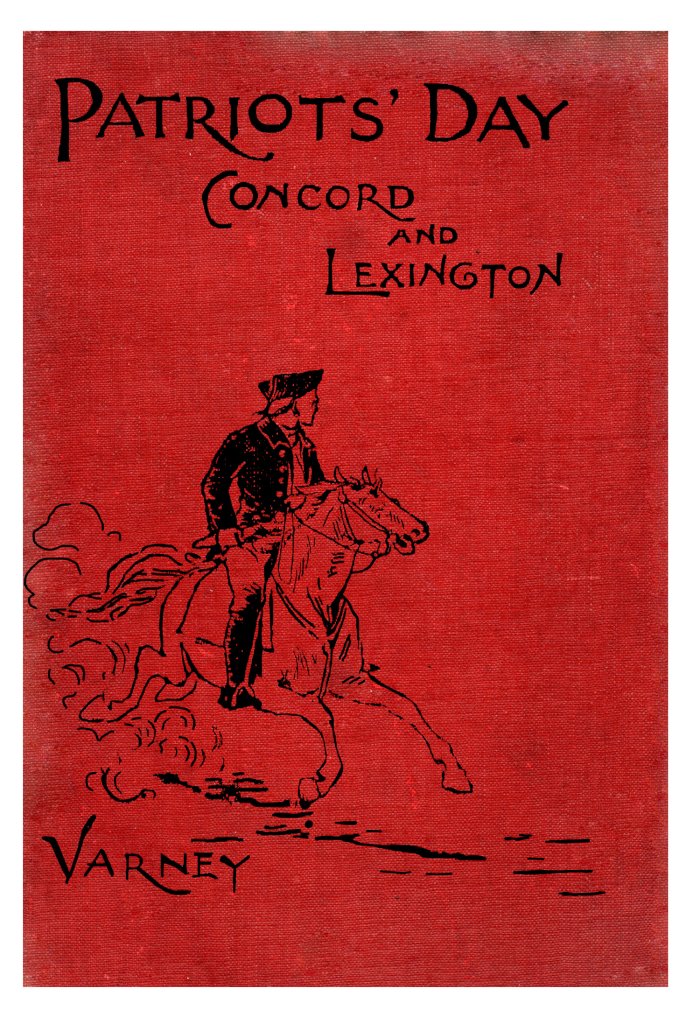
This book is as exact a reproduction of this wonderful little book published in 1895 as we could produce. You will find words spelled and hyphenated the way they are in the original.
Our goal at Battle Road Books is to keep the history of the Revolutionary War alive and vibrant and easily accessible. We also don’t think you should pay an arm and a leg just to read these old books.

Get your Favorite Flag on a coffee mug. Or maybe your favorite Founding Fathers Quote on a travel mug. Custom Orders welcome.

Visit our Sister Site - Revive 1775

YES! You can now sponsor your favorite page on Revolutionary War and Beyond. Click below for information.



Homepage | Newsletter | Causes | Declaration | Bill of Rights | Founders
Facts | Flags | Quotes | Games | Attractions | Documents | Blog | Store | Advertise
 |
|
Privacy | Sitemap | Citations | Contact
Revolutionary War and Beyond © 2008-2019
Facebook Comments