Fourth Amendment Court Cases
Each of these Fourth Amendment Court Cases is somehow significant to the way the Supreme Court has interpreted the Fourth Amendment to the US Constitution. Well, most are significant, some are just interesting!
Fourth Amendment Court Cases - Mapp vs. Ohio
In a case called Mapp vs. Ohio, 1961, the Supreme Court extended 4th Amendment restrictions to all state governments. Before this time, the 4th Amendment was only applied to the Federal Government.

Fourth Amendment Court Cases - Katz vs. United States
In Katz vs. United States, 1967, a test was established that has been used widely in judging 4th Amendment cases ever since. This is a two part test that defines a legal search according to the 4th Amendment. The test states that the government's actions must not infringe upon the person's subjective expectation of privacy (meaning that it is the individual's opinion that the place or thing to be searched is private), and secondly, that the expectation of privacy is reasonable, meaning that society in general would agree that it is private.
Fourth Amendment Court Cases - Dumbra vs. United States
In Dumbra vs. United States, 1925, the Court defined what is meant by probable cause in the 4th Amendment. The Court ruled that probable cause was a lesser standard than that used to convict a person of a crime. It also said that if the circumstances would "warrant a man of reasonable caution in the belief" that a crime had been committed, then probable cause had been determined. The officer does not have to be correct in his assumption that a crime had been committed, he just has to be reasonably convinced by the facts.
Fourth Amendment Court Cases - Terry vs. Ohio
In Terry vs. Ohio, 1968, the Supreme Court allowed for a pat down search without a warrant if the officer observed suspicious behavior and reasonably believed that a crime was being committed. In this case, the Court said the officer must be able to point to specific facts that led him to this belief.
Read more about the history and meaning of the Fourth Amendment here.
Learn more about these Amendments:
Preamble to the Bill of Rights
Learn about the 1st Amendment here.
Learn about the 2nd Amendment here.
Learn about the 3rd Amendment here.
Learn about the 4th Amendment here.
Learn about the 5th Amendment here.
Learn about the 6th Amendment here.
Learn about the 7th Amendment here.
Learn about the 8th Amendment here.
Learn about the 9th Amendment here.
Learn about the 10th Amendment here.
- Main Bill of Rights page.
- For a brief synopsis of the First Ten Amendments go here.
- Learn about the Purpose of the Bill of Rights here.
- Read about the History of the Bill of Rights here.
- Look at the Bill of Rights in Pictures here.
Revolutionary War and Beyond Home
Like This Page?
© 2008 - 2022 Revolutionary-War-and-Beyond.com Dan & Jax Bubis
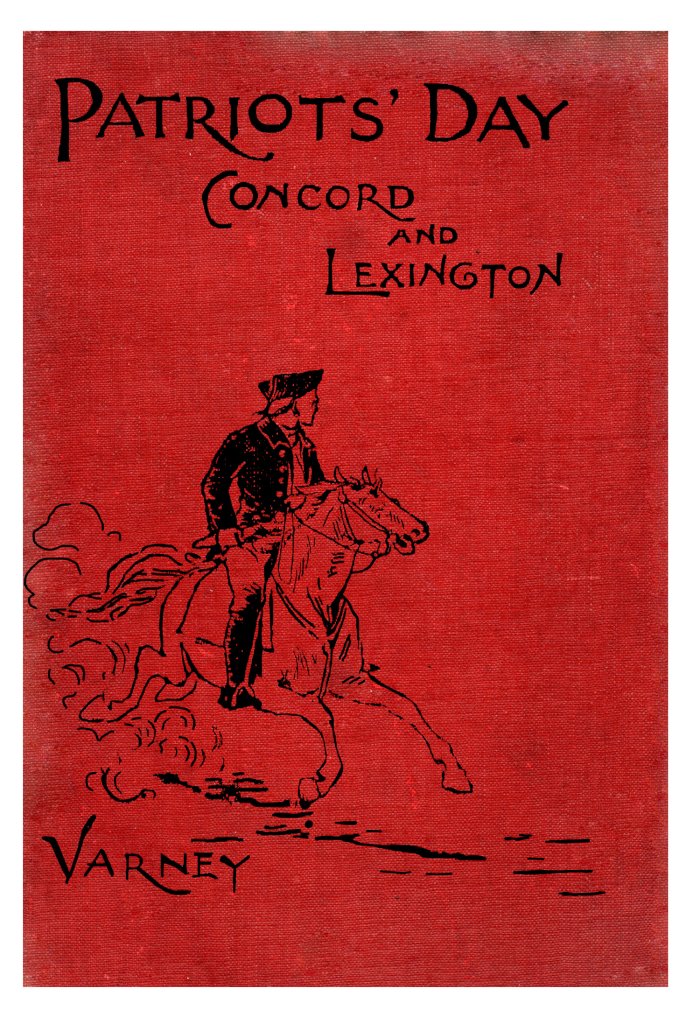
This book is as exact a reproduction of this wonderful little book published in 1895 as we could produce. You will find words spelled and hyphenated the way they are in the original.
Our goal at Battle Road Books is to keep the history of the Revolutionary War alive and vibrant and easily accessible. We also don’t think you should pay an arm and a leg just to read these old books.
Get your Favorite Flag on a coffee mug. Or maybe your favorite Founding Fathers Quote on a travel mug. Custom Orders welcome.
Visit our Sister Site - Revive 1775
YES! You can now sponsor your favorite page on Revolutionary War and Beyond. Click below for information.



Homepage | Newsletter | Causes | Declaration | Bill of Rights | Founders
Facts | Flags | Quotes | Games | Attractions | Documents | Blog | Store | Advertise
 |
|
Privacy | Sitemap | Citations | Contact
Revolutionary War and Beyond © 2008-2019
Facebook Comments