George Washington letter to
Joseph Reed
January 4, 1776
In this George Washington letter to Joseph Reed, Washington talks about the condition of the Continental Army during the Siege of Boston. Colonel Joseph Reed was a secretary and aide-de-camp to General Washington. Reed later became the Governor of Pennsylvania for three terms. Joseph Reed was also the creator of the first navy flag called the Washington Cruisers Flag.

 Betsy Ross Flag
This letter was written a few days after Washington's troops lifted a flag known as the Grand Union flag at Cambridge. The Grand Union flag was a common British Red Ensign flag, the official flag of Great Britain at the time, with white stripes added to its red field. This created confusion amongst the British troops, who interpreted the flag as a sign of submission to King George III. A speech from the King, offering leniency if they would surrender their rebellion, had just arrived and the soldiers thought the raising of the flag indicated the colonists' decision to surrender. This event figures into the study of whether or not Betsy Ross really created the first American flag. More on the Betsy Ross flag here.
In the rest of the letter, George Washington talks about the increasing number of British troops arriving in Boston, that his army is dwindling in size as his soldiers' contracts expire, and he mentions that he is hearing ominous signs that the British are about to invade New York. He seems to indicate that he realizes independence is inevitable.
George Washington letter to Joseph Reed
Cambridge, January 4, 1776.
DEAR SIR: We are, at length, favoured with a sight of His Majesty's most gracious speech, breathing sentiments of tenderness and compassion for his deluded American subjects. The echo is not yet come to hand, but we know what it must be; and, as Lord North said, (and we ought to have believed and acted accordingly,) we now know the ultimatum of British justice. The speech I send you. A volume of them was sent out by the Boston gentry, and, farcical enough, we gave great joy to them, without knowing or intending it; for, on that day, the day which gave being to the new Army, but before the proclamation came to hand, we had hoisted the Union flag, in compliment to the United Colonies. But, behold, it was received in Boston as a token of the deep impression the speech had made upon us, and as a signal of submission. So we hear, by a person out of Boston last night. By this time, I presume, they begin to think it strange that we have not made a formal surrender of our lines.
Admiral Shuldham is arrived at Boston. The Fifty-Fifth, and the greater part, if not all, of the Seventeenth Regiment, are also arrived. The rest of the five regiments from Ireland, were intended for Halifax and Quebeck.
It is easier to conceive than to describe the situation of my mind for some time past, and my feelings under our present circumstances. Search the volumes of history through, and I much question whether a case similar to ours is to be found; namely, to maintain a post, against the flower of the British troops, for six months together, without powder, and then to have one army disbanded, and another to be raised, within the same distance of a reinforced enemy. It is too much to attempt. What may be the final issue of the last manoeuvre, time only can unfold. I wish this month was well over our heads. The same desire of retiring into a chimney-corner, seized the troops of New-Hampshire, Rhode-Island, and Massachusetts, so soon as their time expired, as had wrought upon those of Connecticut, notwithstanding many of them made a tender of their services to continue, till the lines could be sufficiently strengthened. We are now left with a good deal less than half-raised regiments, and about five thousand militia, who only stand engaged to the middle of this month, when, according to custom, they will depart, let the necessity of their stay be ever so urgent. Thus, for more than two months past, I have scarcely emerged from one difficulty, before I have been plunged into another. How it will end, God, in His great goodness will direct. I am thankful for his protection to this time. We are told, that we shall soon get the Army completed, but I have been told so many things, which have never come to pass, that I distrust every thing.
I fear your fleet has been so long in fitting, and the destination of it so well known, that the end will be defeated, if the vessels escape. How is the arrival of French troops in the West-Indies, and the hostile appearance there, to be reconciled with that part of the King's speech, wherein he assures Parliament, "that, as well from the assurances I have received, as from the general appearance of affairs in Europe, I see no probability that the measures which you may adopt, will be interrupted by disputes with any foreign Power?" I hope the Congress will not think of adjourning at so important and critical a juncture as this. I wish they would keep a watchful eye to New-York; from the account of Captain Sears, now here, much is to be apprehended from that quarter.
I am, with sincere and affectionate regard, &c.,
GEORGE WASHINGTON.
Published 10/20/11

- Learn about these other American History flags:
- Washington Cruisers Flag
- Grand Union Flag
- British Red Ensign Flag
- Betsy Ross Flag
- And learn more about George Washington and Betsy Ross here.
Like This Page?
© 2008 - 2022 Revolutionary-War-and-Beyond.com Dan & Jax Bubis
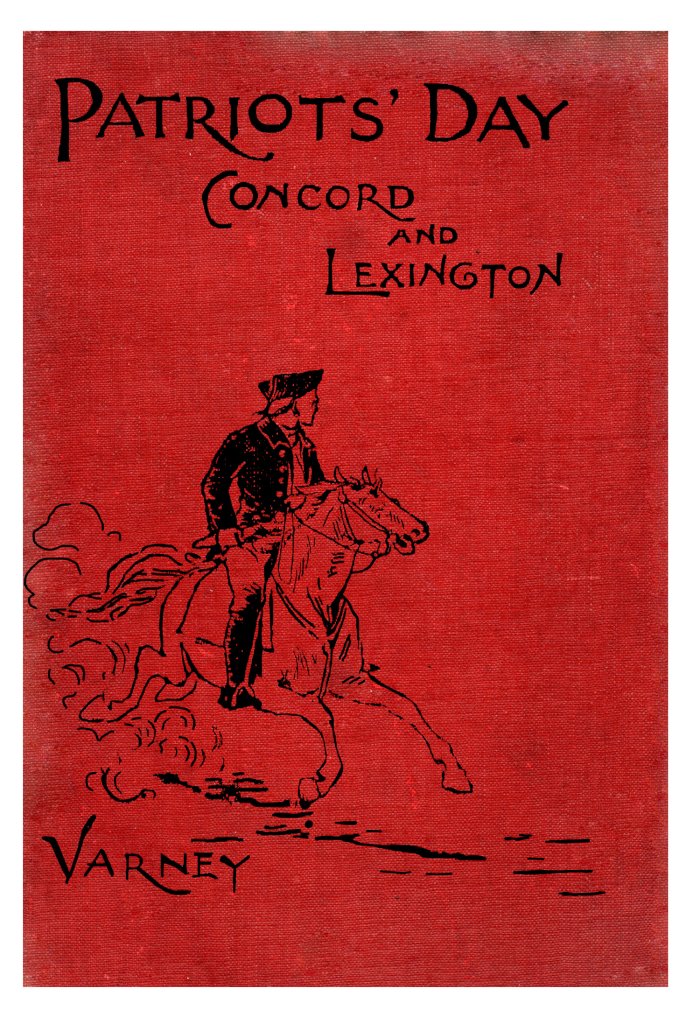
This book is as exact a reproduction of this wonderful little book published in 1895 as we could produce. You will find words spelled and hyphenated the way they are in the original.
Our goal at Battle Road Books is to keep the history of the Revolutionary War alive and vibrant and easily accessible. We also don’t think you should pay an arm and a leg just to read these old books.

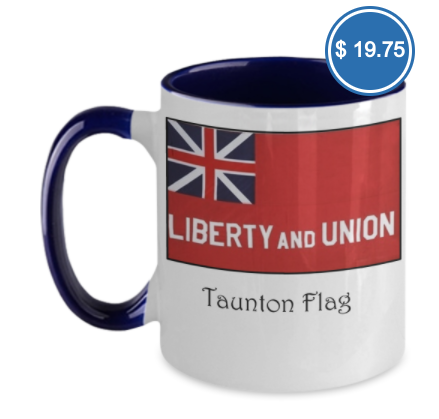
Get your Favorite Flag on a coffee mug. Or maybe your favorite Founding Fathers Quote on a travel mug. Custom Orders welcome.
Visit our Sister Site - Revive 1775
YES! You can now sponsor your favorite page on Revolutionary War and Beyond. Click below for information.



Homepage | Newsletter | Causes | Declaration | Bill of Rights | Founders
Facts | Flags | Quotes | Games | Attractions | Documents | Blog | Store | Advertise
 |
|
Privacy | Sitemap | Citations | Contact
Revolutionary War and Beyond © 2008-2019
Facebook Comments