History of Income Tax - Current Events Post - January 11, 2011
There is much debate about taxes today. You might not know about the history of income tax in the United States, but a short lesson in tax history will help you understand the issue as you hear it debated today.

History of Income Tax
You have heard the common phrase "taxation without representation." This was one of the causes of the Revolutionary War. Great Britain was taxing the colonists without their consent. Taxation with consent, through elected representatives, was a common and expected practice in the British world. After the French and Indian War, however, Britain had amassed a huge debt defending the colonies. Britain attempted to wipe out some of this debt by enacting taxes on the colonists.
In the past, the elected colonial legislatures had enacted taxes, a practice which the colonists had no problem with because they could lobby their elected leaders for any changes in tax policy they desired. But with the passage of the Sugar Act and the Stamp Act, Parliament bypassed the colonial legislatures and taxed the colonists directly. This infuriated the colonists since they had no representatives in Parliament. They began to cry out against "taxation without representation."
In those days, the colonists were taxed a very small percent of their income. Most taxes were taxes collected through trade and not on personal income. Taxes were collected on the buying and selling of goods and during their shipping. Personal income taxes were not created until much later in the history of the United States.
Today, some people estimate that Americans pay at least 50% of their income in taxes, including personal income taxes from the state and the federal government, sales taxes, gasoline taxes, unemployment insurance taxes, social security taxes, licenses and fees for things such as vehicle registrations and gun permits, property taxes and the list goes on and on.
There is a raging debate in the nation today about the proper role of the government to tax its citizens and in how much is proper. Of course, everyone should understand that the Constitution of the United States is the source from which any tax laws should be drawn. In fact, the Constitution mentions a derivative of the word tax only a few times. These few times say that taxes must be placed on the states proportionally according to population; that Congress has the power to lay and collect taxes to pay the debts and provide for the common defence and general welfare of the United States; that a tax shall be collected on the importation of slaves (this was an attempt from Northerners to reduce the practice of slavery); and that no taxes can be placed on goods exported from one state to another.
The income tax was not allowed until the creation of the Sixteenth Amendment to the Constitution. Please visit our friend site - www.easy-tax-information, at the following page History of Income Tax, for a detailed understanding of the history of income tax.
By the way, both www.easy-tax-information.com and www.revolutionary-war-and-beyond.com were created by ordinary people using the tools of a company called Solo Build It. You can learn more about how we created these websites and possibly create your own at the Make Your Own Website page.
The Minuteman (Former Editor)
SOUND OFF on History of Income Tax
OK, now you've had a chance to read about some of the issues concerning taxes. What are your thoughts? Share your opinions here with the world. If you post your opinion to this page, your answer will receive a dedicated page with your response that you can share with others or just be proud of because you shared your opinion on this very important current event!
What Other Visitors Have Said
Click below to see contributions from other visitors to this page...
Public Outrage at the 16th Amendment. Not rated yet
The information about the creation of taxes is most revealing about the conception of "government mandate taxes". I do question the 16th Amendment, the …
Like This Page?
© 2008 - 2022 Revolutionary-War-and-Beyond.com Dan & Jax Bubis
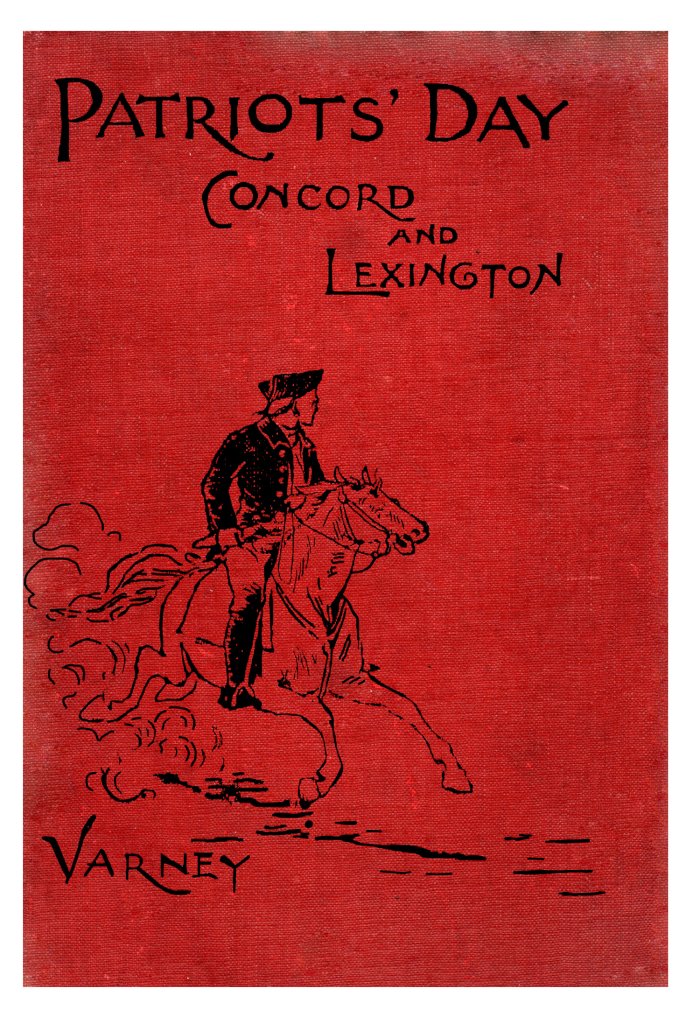
This book is as exact a reproduction of this wonderful little book published in 1895 as we could produce. You will find words spelled and hyphenated the way they are in the original.
Our goal at Battle Road Books is to keep the history of the Revolutionary War alive and vibrant and easily accessible. We also don’t think you should pay an arm and a leg just to read these old books.

Get your Favorite Flag on a coffee mug. Or maybe your favorite Founding Fathers Quote on a travel mug. Custom Orders welcome.

Visit our Sister Site - Revive 1775

YES! You can now sponsor your favorite page on Revolutionary War and Beyond. Click below for information.



Homepage | Newsletter | Causes | Declaration | Bill of Rights | Founders
Facts | Flags | Quotes | Games | Attractions | Documents | Blog | Store | Advertise
 |
|
Privacy | Sitemap | Citations | Contact
Revolutionary War and Beyond © 2008-2019
Facebook Comments