Benjamin Franklin letter to
Peter Collinson - September 27, 1750

This Benjamin Franklin letter is part of a series of letters he wrote about his electrical studies that eventually made him a household name. Franklin sent most of these letters to Peter Collinson, a member of the Royal Society in London, an organization that promoted the sciences.
Collinson recognized the importance of Franklin's discoveries and had the letters published in a book called "Experiments and Observations on Electricity Made at Philadelphia in America," so others could benefit and learn from Franklin's observations. This book became the most printed book of the 18th century and caused Franklin to gain widespread fame that eventually helped him secure help from the French monarchy during the American Revolution.
In this particular letter, Franklin tells of an experiment with a Leyden jar, cork balls and wires that show how electricity is passed from one object to another. He also discusses how electricity remains in equilibrium between objects and is neither lost nor created, but merely transferred between the objects, a key observation in understanding how electricity acts. You can read the other letters about electricity at our Benjamin Franklin and Electricity letters page.

Benjamin Franklin letter about Electricity
to Peter Collinson
Additional Experiment proving that the Leyden Bottle has no more Electrical Fire in it, when charg'd, than before; nor less when discharg'd. That in Discharging, the Fire does not issue from the Wire and Coating at the same Time, as some have thought; but that the Coating always receives what is discharg'd by the Wire, or an equal Quantity: the outer Surface being always in a negative State of Electricity, when the inner Surface is in a positive State.
Place a thick Plate of Glass under the rubbing Cushion, to cut off the Communication of Electrical Fire from the Floor to the Cushion: Then if there be no fine Points or hairy Threads Sticking out from the Cushion or from the Parts of the Machine opposite to the Cushion, of which you must be careful, you can get but a few Sparks from the Prime Conductor; which are all the Cushion will part with.
Hang a Vial then on the Prime Conductor, and it will not charge, tho' you hold it by the Coating. But
Form a Communication by a Chain from the Coating to the Cushion, and the Phial will charge.
For the Globe then draws the Electrical Fire out of the Outside Surface of the Phial and forces it thro' the Prime Conductor and Wire of the Phial into the inside Surface.
Thus the Bottle is charg'd with it's own Fire, no other being to be had, while the Glass Plate is under the Cushion.
Hang two Cork Balls by Flaxen Threads to the Prime Conductor, then touch the Coating of the Bottle, and they will be electrified, and recede from each other.
For just as much Fire as you give the Coating, so much is discharg'd thro' the Wire upon the Prime Conductor, whence the Cork Balls receive an Electrical Atmosphere. But
Take a Wire bent in this Form with a Wax Handle to hold it by, and apply one End of this Wire to the Coating and the other at the Same Time to the Prime Conductor; the Vial will be discharged. And if the Balls are not electrified before the Discharge, neither will they appear to be so after the Discharge, for they will not repel each other.
Now if the Fire, discharg'd from the inside Surface of the Bottle, thro' its Wire, remain'd on the prime Conductor, the Balls would be electrified and recede from each other.
If the Vial really exploded at both Ends and discharged Fire from both Coating and Wire, the Balls would be more electrified and recede farther: for none of the Fire can escape, the Wax Handle preventing.
But if the Fire with which the inside Surface is surcharg'd be so much precisely as is wanted by the outside Surface, it will pass round thro' the Wire fixt to the Wax Handle, restore the Equilibrium in the Glass and make no Alteration in the State of the Prime Conductor.
Accordingly we find that if the Prime Conductor be electrified, and the Cork Balls in a State of Repellancy, before the Bottle is discharg'd, they continue so afterwards: If not, they are not electrified by that Discharge.
To P. Collinson Esq. F.R.S. London

Go back to the Ben Franklin Electricity letters list here.
You can also read about the history of Benjamin Franklin's studies on electricity here.
Check out our Facts about Benjamin Franklin here and check out our Ben Franklin Quotes here.
Benjamin Franklin and Electricity Letters
Benjamin Franklin and Electricity
Facts About Benjamin Franklin 2
Revolutionary War and Beyond Home
Like This Page?
© 2008 - 2022 Revolutionary-War-and-Beyond.com Dan & Jax Bubis
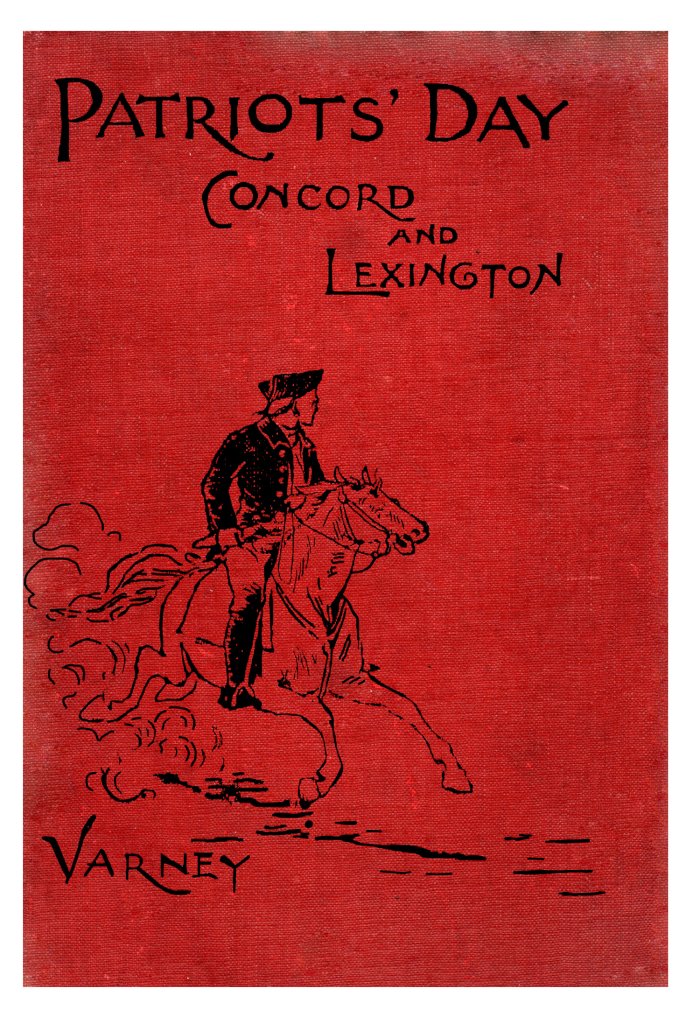
This book is as exact a reproduction of this wonderful little book published in 1895 as we could produce. You will find words spelled and hyphenated the way they are in the original.
Our goal at Battle Road Books is to keep the history of the Revolutionary War alive and vibrant and easily accessible. We also don’t think you should pay an arm and a leg just to read these old books.

Get your Favorite Flag on a coffee mug. Or maybe your favorite Founding Fathers Quote on a travel mug. Custom Orders welcome.

Visit our Sister Site - Revive 1775

YES! You can now sponsor your favorite page on Revolutionary War and Beyond. Click below for information.



Homepage | Newsletter | Causes | Declaration | Bill of Rights | Founders
Facts | Flags | Quotes | Games | Attractions | Documents | Blog | Store | Advertise
 |
|
Privacy | Sitemap | Citations | Contact
Revolutionary War and Beyond © 2008-2019
Facebook Comments