American Historical Documents
This page includes links to all of the American historical documents
that are mentioned anywhere in this website. Revolutionary War
documents, Revolutionary War letters, proclamations, newspaper articles,
British Acts, presidential addresses, writings of various Founding Fathers, etc. Just click on the link to read the full text of each
document. In some cases there is a picture of the document as well.

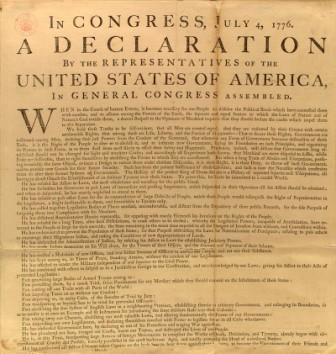 Click to enlarge Declaration of Independence |

American Historical Documents - 1719
The Taking of Teach the Pirate - 1719 - A poem written by a twelve year old Benjamin Franklin upon hearing of the killing of Blackbeard the Pirate.
American Historical Documents - 1725
A Dissertation on Liberty and Necessity, Pleasure and Pain - 1725 - Benjamin Franklin's first political pamphlet, which he later repudiated.
American Historical Documents - 1728
Articles of Belief and Acts of Religion - 1728 - An early writing of Benjamin Franklin describing his religious beliefs as a young man.
American Historical Documents - 1729
A Modest Enquiry into the Nature and Necessity of a Paper-Currency - 1729 - An article by Benjamin Franklin.
American Historical Documents - 1744
Rules of Civility by George Washington - 1744 - A list of proverbs and maxims written down by George Washington as a boy of 16.
American Historical Documents - 1747
Benjamin Franklin letter to Peter Collinson - March 28, 1747 - One of Franklin's electricity letters.
Benjamin Franklin letter to Peter Collinson - May 25, 1747 - One of Franklin's electricity letters.
Benjamin Franklin letter to Peter Collinson - July 28, 1747 - One of Franklin's electricity letters.
Plain Truth - 1747 - Political pamphlet by Benjamin Franklin.
American Historical Documents - 1749
Benjamin Franklin letter to Peter Collinson - April 29, 1749 - One of Franklin's electricity letters.
Benjamin Franklin letter to John Mitchel - April 29, 1749 - One of Franklin's electricity letters.
Constitutions of the Publick Academy in the City of Philadelphia - November 13, 1749 - Pamphlet by Benjamin Franklin that laid the foundation of the University of Pennsylvania.
American Historical Documents - 1750
Benjamin Franklin letter to Peter Collinson - July 29, 1750 - One of Franklin's electricity letters.
Benjamin Franklin letter to Peter Collinson (2) - July 29, 1750 - One of Franklin's electricity letters.
Benjamin Franklin letter to Peter Collinson - September 27, 1750 - One of Franklin's electricity letters.
American Historical Documents - 1751
Benjamin Franklin letter to Peter Collinson - June 29, 1751 - One of Franklin's electricity letters.
Benjamin Franklin letter to Cadwallader Colden - October 31, 1751 - One of Franklin's electricity letters.
American Historical Documents - 1753
Benjamin Franklin letter to Cadwallader Colden - April 12, 1753 - One of Franklin's electricity letters.
Benjamin Franklin letter to Jared Eliot - April 12, 1753 - One of Franklin's electricity letters.
American Historical Documents - 1758
The Way to Wealth - 1758 - A compilation of 25 years of Benjamin Franklin's best sayings from Poor Richard's Almanack.
American Historical Documents - 1760
Thomas Hancock Letter - May 21, 1760 - Letter instructing his business partners to care for young John Hancock in London.
American Historical Documents - 1764
Instructions to Boston's Representatives - May 28, 1764 - Directions from the Boston town council to their legislators instructing them to resist Parliament's taxation scheme as outlined in the Sugar Act.
Rights of the British Colonies Asserted and Proved - 1764 - A pamphlet by James Otis explaining why Parliament had no authority to tax the colonists.
New York Petition to the House of Commons - October 18, 1764 - New York's response to Parliament challenging the recently passed Sugar Act.
Massachusetts Petition to the House of Commons - November 3, 1764 - Massachusetts petition to Parliament challenging the recently passed Sugar Act.
Virginia Petition to the House of Commons - December 18, 1764 - Virginia's petition to Parliament challenging the recently passed Sugar Act and the impending Stamp Act.
American Historical Documents - 1765
Jared Ingersoll Letter to Thomas Fitch - February 11, 1765 - This letter relates a famous debate in Parliament about the upcoming Stamp Act.
Stamp Act of 1765 text - March 22, 1765 - Text of the Stamp Act.
The Regulations Lately Made Concerning the Colonies by Thomas Whately - A pamphlet describing Parliament's justifications concerning the Stamp Act taxes.
Considerations on the Propriety of Imposing Taxes by Daniel Dulany - The most read pamphlet of 1765, describes why the Stamp Act is illegal.
Quartering Act of 1765 - May 15, 1765 - An act that angered Americans, which required them to house and feed British troops.
Declaration of Rights and Grievances - October 19, 1765 - This document was produced by the Stamp Act Congress to enumerate the reasons why the Stamp Act was unjust.
New York Non-Importation Agreement - October 31, 1765 - Agreement of New York merchants not to import any goods from England until the Stamp Act is repealed.
William Houston's Resignation as Stamp Distributor from North Carolina - November 16, 1765 - Letter of resignation Houston was forced to sign at the hands of an angry Stamp Act mob.
American Historical Documents - 1766
In Defense of the Colonies Speech by William Pitt - January 14, 1766 - Speech given by William Pitt in Parliament defending the colonists in their uprising against the Stamp Act.
Letter from London Merchants Urging Repeal of the Stamp Act - January 17, 1766 - London merchants urge Parliament to repeal the Stamp Act or they will face financial ruin.
The Examination of Benjamin Franklin before the House of Commons - February 13, 1766 - Franklin's appearance before Parliament that helped convince them to repeal the Stamp Act.
American Historical Documents - 1768
Circular Letter from Massachusetts House of Representatives - February 11, 1768 - This letter was drafted by Samuel Adams and was one of the first public challenges of King George III and the British Parliament.
Resolutions of the Boston Town Meeting - September 13, 1768 - This resolution was passed by the citizens of Boston in response to British troops being stationed in their city.
John Hancock Circular Letter - September 14, 1768 - This Letter was by the Boston Town Meeting to invite all Massachusetts to a meeting to discuss a joint response to the Townshend Acts, chaired by John Hancock.
American Historical Documents - 1769
Mysteries of Government - February 27, 1769 - An article published by Samuel Adams discussing the rights of British citizens.
American Historical Documents - 1772
The Rights of the Colonists - November 20, 1772 - A document by Samuel Adams stating the rights of the colonists as British citizens.
American Historical Documents - 1773
Rules by Which a Great Empire May Be Reduced to a Small One - September 11, 1773 - A political satire by Benjamin Franklin.
American Historical Documents - 1774
John Hancock Boston Massacre Speech - March 5, 1774 - John Hancock's most famous speech delivered on the fourth anniversary of the Boston Massacre.
Boston Port Act - March 31, 1774 - This act of the British Parliament sealed off Boston Harbor with a fleet of warships in response to the Boston Tea Party.
William Hooper letter to James Iredell - April 26, 1774 - In this letter, future Declaration of Independence signer William Hooper of North Carolina makes the first prediction of American independence, earning him the title "Prophet of Independence."
Circular Letter of the Boston Committee of Correspondence - May 13, 1774 - This letter is a request to all the other colonies to join in a boycott of all British goods in response to the Boston Port Act that closed Boston harbor.
Quartering Act of 1774 - June 2, 1774 - The second quartering act which required American's to house and feed British soldiers.
A Summary View of the Rights of British America by Thomas Jefferson - July 1774
The Suffolk Resolves - September 6, 1774 - written by Dr. Joseph Warren
Declaration and Resolves of the First Continental Congress - October 14, 1774 - First Continental Congress' response to England's treatment, their list of grievances and plans for the future.
Letter to the Inhabitants of the Province of Quebec - October 26, 1774 - Letter from Congress asking Quebec to join in the rebellion against England.
American Historical Documents - 1775
Paul Revere's Ride Map - April 18, 1775 - A National Park Service Map showing the route of Paul Revere's ride.
Joseph Warren letter to the Inhabitants of Great Britain - April 26, 1775 - Dr. Warren tells the citizens of Britain about the atrocities committed by British soldiers at the Battles of Concord and Lexington.
John Hancock Letter to Dorothy Hancock - May 7, 1775 - Letter written to his wife after safely arriving in New York after fleeing the British at the Battle of Lexington.
General Thomas Gage Proclamation - June 12, 1775 - General Gage's Proclamation offering pardon to all involved in the resistance beginning at Lexington and Concord who would lay down their arms, except for Samuel Adams and John Hancock.
Olive Branch Petition - July 5, 1775
Declaration of the Causes and Necessities of Taking up Arms - July 6, 1775
John Adams letter to James Warren - July 24, 1775 - This is the letter that was captured and published by the British, revealing America's continued war preparations in spite of their plea for peace in the Olive Branch Petition.
John Adams letter to Abigail Adams - July 24, 1775 - This letter was also captured by the British.
Address to the Assembly of Jamaica - July 25, 1775 - In this address, the Congress seeks to explain its position at the beginning of the Revolutionary War to the inhabitants of Jamaica.
Timothy Pickering's Letter to George Washington 1775 - This letter accompanied Pickering's book on training the militia when it was delivered to General Washington.
Liberty Tree by Thomas Paine - Song celebrating liberty by Thomas Paine.
King George III's Rebellion Proclamation - August 23, 1775
John Hancock's Wedding Announcement - September 4, 1775
Joseph Reed letter to John Glover - October 20, 1775 - Reed discusses supplying the Continental Army troops during the Siege of Boston and the design for the first US naval flag.
Abigail Adams letter to John Adams - November 12, 1775 - Abigail reveals American anger toward the British government after the king refused to receive the Olive Branch Petition.
Letter from the Continental Congress to Oswald Eve - November 21, 1775 - Letter from Congress asking Oswald Eve to assist Paul Revere in establishing a gun powder mill in Massachusetts.
Congress' response to King George's rejection of the Olive Branch Petition - December 6, 1775
The Rattlesnake as a Symbol of America - December 27, 1775 - Essay by Ben Franklin.
Rachel Revere letter to Paul Revere - 1775 - Letter from Rachel Revere to her husband that was taken by the traitor Dr. Benjamin Church and given to British General Gage.
Paul Revere deposition - 1775 - Paul Revere's personal account of his midnight ride in a deposition written for the Massachusetts Provincial Congress.
American Historical Documents - 1776
George Washington letter to Joseph Reed - January 4, 1776 - Letter discussing the Siege of Boston.
Common Sense by Thomas Paine - January 10, 1776
Call to Fasting and Prayer by the Continental Congress - March 16, 1776
Instructions for Georgia Delegates to the Continental Congress - April 5, 1776 - This is the Georgia Council of Safety's instructions to its Delegates to Congress shortly before the Declaration of Independence.
Halifax Resolves - April 12, 1776 - Passed by North Carolina, the Resolves were the first official instructions from any colony authorizing its delegates to Congress to vote for independence from Great Britain.
Preamble and Resolution of the Virginia Convention - May 15, 1776 - This is the resolution that ordered the Virginia delegates to the Continental Congress to propose a resolution that the united colonies ought to be "free and independent States, absolved from all allegiance to, or dependence upon, the Crown or Parliament of Great Britain."
Joseph Hewes letter to James Iredell - May 17, 1776 - Letter discussing efforts of the Congress to equip the Continental Army.
Lee Resolution - June 7, 1776 - This is the resolution that proposed that the united colonies declare themselves free and independent states from Great Britain.
Virginia Declaration of Rights by George Mason and Thomas Ludwell Lee - June 12, 1776
Joseph Hewes letter to James Iredell - June 28, 1776 - Letter discussing Hewes' confidence in the upcoming vote for independence.
Thomas Jefferson's draft Constitution for the State of Virginia - June 1776
Original unedited draft of the Declaration of Independence by Thomas Jefferson - June 1776
Original Rough Draft of the Declaration of Independence - June 1776 - This is the Declaration text after it had been edited by Benjamin Franklin and John Adams. This is the version the Committee of Five submitted to Congress.
The Declaration of Independence - July 4, 1776 - This is the final approved version by Congress.
Chronological list of locations the Declaration of Independence has been stored
John Hancock letter to George Washington - July 6, 1776 - This letter was sent by John Hancock to General Washington with a copy of the new Declaration of Independence and instructions to read it to his troops.
John Hancock Letter to New Jersey Convention - July 16, 1776 - This letter shows the desperation of Congress as its President writes the New Jersey Convention to send as many troops as they possibly can without delay.
American Independence - August 1, 1776 - Speech delivered by Samuel Adams at the State House in Philadelphia.
Thomas Jefferson letter to Edmund Pendleton - August 26, 1776 - In this letter Jefferson reveals his views about the death penalty and other justified forms of punishment.
The American Crisis - Pamphlet 1 - December, 1776 - This is the first of 16 pamphlets that make up the American Crisis by Thomas Paine - Read to the troops on December 24, 1776
American Historical Documents - 1777
John Hancock Letter to Dorothy Hancock - March 10, 1777 - This letter shows the frustration and loneliness this patriot felt during the dark days of the Revolutionary War.
George Washington Letter to John Hancock, October 22, 1777 - George Washington's response upon hearing that John Hancock was resigning as President of Congress.
American Historical Documents - 1778
Boston Town Meeting Resolution Regarding Return of Tories - August, 1778 - Boston's decision about whether or not to allow Tories to return home to Boston.
John Hancock Letter to Henry Quincy - August 30, 1778 - This letter shows the desperate condition in Boston during the Revolutionary War.
John Hancock Resignation Letter - October, 1778 - John Hancock's resignation letter as President of Congress.
Letter from Benjamin Franklin and John Adams to Domenico Caracciolo - October 9, 1778 - Describing the new American flag to the Sicilian Ambassador to France.
American Historical Documents - 1779
Richard Peters letter to George Washington - May 10, 1779 - Letter discussing procuring supplies for the Continental Army and the design of the US flag.
Richard Peters letter to George Washington - September 3, 1779 - Peters asks Washington his opinion about what should be the official flag of the US Army.
George Washington letter to Richard Peters - September 14, 1779 - George Washington describes his preferred flag for the US Army.
American Historical Documents - 1780
Francis Hopkinson letter to Congress - May 25, 1780 - Hopkinson asks for compensation for creating the US Flag, relevant to who created the first American flag.
Francis Hopkinson letter to Congress - June 6, 1780 - Hopkinson's revised bill to Congress for creating the American flag.
American Historical Documents - 1781
Articles of Confederation - March 1, 1781 - The Articles of Confederation were the first official "constitution" governing the thirteen United States.
Notes on the State of Virginia, Part 1 - 1781-1782 - Thomas Jefferson's only published work.
Notes on the State of Virginia, Part 2 - 1781-1782
American Historical Documents - 1782
Preliminary Treaty of Paris of 1782 - November 30, 1782 - The preliminary treaty ending the American Revolution.
American Historical Documents - 1783
Treaty of Paris of 1783 - September 3, 1783 - The definitive Treaty ending the American Revolution.
George Washington Farewell Address to the Army - November 2, 1783 - Washington's address when we retired from the Continental Army.
American Historical Documents - 1785
Memorial Memorial and Remonstrance Against Religious Assessments - James Madison, June 20, 1785 - In this document, Madison speaks out against the practice of using religious tests for those who hold public office.
American Historical Documents - 1787
The Virginia Plan - May 29, 1787 - The Virginia Delegation proposed this plan to the Constitutional Convention, which laid out the basic outline for the new Constitution.
American Historical Documents - 1788
George Washington letter to the Marquis de Lafayette - April 28, 1788 - This letter discusses the nation's debate over whether or not to accept the new Constitution.
James Madison letter to Thomas Jefferson - October 17, 1788 - A letter in cipher that discusses the pros and cons of adding a Bill of Rights to the Constitution.
American Historical Documents - 1789
George Washington's First Inaugural Address - April 30, 1789
James Madison speech to Congress - June 8, 1789 - In this speech, James Madison proposes twenty Amendments to the Constitution, which later became the Bill of Rights.
Twelve Amendments proposed by Congress - September 25, 1789 - These are the original Amendments to the Constitution proposed by Congress.
George Washington's Thanksgiving Proclamation - October 3, 1789
James Madison letter to George Washington - December 5, 1789 - Madison's letter reveals the struggle between different factions to accept or reject the new Constitution.
American Historical Documents - 1791
James Wilson to a Grand Jury - 1791 - James Wilson's views about crime and punishment.
Bill of Rights - December 15, 1791 - The first ten Amendments to the US Constitution.
American Historical Documents - 1792
Property by James Madison - March 29, 1792 - A short essay about the government's responsibility to protect personal property.
Benjamin Rush on the Death Penalty - 1792
American Historical Documents - 1793
Proclamation of Neutrality by George Washington - April 22, 1793
List of books in John Hancock's personal library upon his death - October 8, 1793
American Historical Documents - 1794
Jay's Treaty of 1794 - November 19, 1794 - Treaty ending several outstanding points of contention between Great Britain and the United States after the Revolutionary War.
American Historical Documents - 1795
Proclamation of Fasting and Prayer by Samuel Adams - February 28, 1795
American Historical Documents - 1796
George Washington's Farewell Address - September 19, 1796
American Historical Documents - 1798
Virginia Resolution of 1798 - December 24, 1798 - A document written by James Madison and adopted by General Assembly of Virginia to refute the Alien and Sedition Acts.
Paul Revere letter to Jeremy Belknap - 1798 - The most thorough personal account of Paul Revere's midnight ride in a letter to Jeremy Belknap.
American Historical Documents - 1801
Thomas Jefferson First Inaugural Address - March 1, 1801
American Historical Documents - 1802
Thomas Jefferson’s Letter to the Danbury Baptist Association - January 1, 1802
American Historical Documents - 1809
First Inaugural Address of James Madison - March 4, 1809
American Historical Documents - 1813
Second Inaugural Address of James Madison - March 4, 1813
American Historical Documents - 1814
Star Spangled Banner Lyrics - September 16, 1814
Treaty of Ghent - December 24, 1814 - The signing of this document ended the War of 1812 between the United States and Great Britain.
American Historical Documents - 1817
Detached Memoranda - 1817 - Allegedly written by James Madison refuting the use of public money for religious purposes.
American Historical Documents 1818
Letter from John Adams to Hezekiah Niles - February 13, 1818
American Historical Documents - 1821
Thomas Jefferson's personal account of writing the Declaration of Independence - January 6, 1821
Autobiography of Thomas Jefferson - January 6, 1821
American Historical Documents - 1836
Concord Hymn by Ralph Waldo Emerson - Written for the anniversary of the Battles of Concord and Lexington.
An Eulogy on the Life and Character of James Madison - September 27, 1836 - by John Quincy Adams upon the death of President Madison.
American Historical Documents - 1861
Paul Revere's Ride poem by Henry Wadsworth Longfellow.
American Historical Documents - 1870
The History of the Flag of the United States by William Canby - Testimony of Betsy Ross' grandson telling how his grandmother made the first American flag.
Affidavit of Sophia Hildebrandt, Granddaughter of Betsy Ross - May 27, 1870 - Affidavit from Betsy Ross' granddaughter telling how her grandmother made the first American flag.
Affidavit of Margaret Boggs, Niece of Betsy Ross - June 3, 1870 - Affidavit of Betsy Ross' niece telling how her aunt made the first American flag.
American Historical Documents - 1871
Affidavit of Rachel Fletcher, Daughter of Betsy Ross - July 31, 1871 - Affidavit of Betsy Ross' daughter telling how her mother made the first American flag.
American Historical Documents - 1876
Caroline Purdy letter to Georgiana Appleton - 1876 - Purdy tells how her mother, Mary Young Pickersgill, created the Star Spangled Banner Flag that was the inspiration for the National Anthem.
American Historical Documents - 1912
Eben Appleton letter to Charles Walcott - December 12, 1912 - Appleton donates his family's heirloom, the original Star Spangled Banner Flag, to the Smithsonian Institution.
Current version
of the Constitution of the United States of America - Last revised May 7, 1992
American Historical Documents
The Following Documents are important British Documents that influenced the creation of the United States and its ideals:
Magna Carta - 1215 AD - First British document requiring the monarch to obey written laws.
English Habeas Corpus Act of 1679
Molasses Act - December 25, 1733 - An act meant to control colonial trade through the taxing of molasses, one of they trading items of the colonists.
Currency Act of 1751 - June 10, 1751
Proclamation of 1763 - October 7, 1763 - An act that separated colonial settlers and Indians in an effort to prevent further war between them.
Sugar Act - 1764 - The first act of Parliament to directly tax the colonists, stirring great anger and causing the colonists to declare that Parliament had no right to tax them.
Currency Act of 1764- September 1, 1764 - An act restricting the colonists from printing their own money, partly responsible for the anger that led to the American Revolution.
Stamp Act - March 22, 1765 - Text of the Stamp Act, one of the leading causes of anger in the colonies leading to the Revolution.
Quartering Act of 1765 - May 15, 1765 - This act required the colonies to provide and pay for food, supplies and housing for British troops posted in the colonies.
An Act Repealing the Stamp Act - March 18, 1766
Declaratory Act Text - March 18, 1766 - Passed along with the repeal of the Stamp Act, this act reasserted Parliament's authority to tax and govern the colonies however it chose.
New York Restraining Act - June 15, 1767 - Text of the New York Restraining Act which shut down the New York Assembly for failing to comply with the Quartering Act of 1765.
Revenue Act of 1767 - June 29, 1767 - The cornerstone of the Townshend Acts, which placed new taxes on glass, paper, painters' colors, lead and tea in the colonies.
Commissioners of Customs Act - June 29, 1767 - One of the Townshend Acts that created a new board of customs commissioners in Boston to enforce customs taxes and regulations in the colonies.
Indemnity Act of 1767 - June 29, 1767 - Part of the Townshend Acts which made it easier for the British East India Company to export and sell tea in the colonies.
Vice-Admiralty Court Act - July 6, 1768 - The last of the Townshend Acts which augmented the power of royal admiralty courts to try accused violators of customs regulations.
Earl of Hillsborough Circular Letter - April 21, 1768 - A letter instructing royal governors to disband colonial assemblies if they expressed support for a letter from the Massachusetts Assembly criticizing various acts of Parliament.
Quartering Act of 1774 - June 2, 1774
To Anachreon in Heaven Lyrics - The Star Spangled Banner was written to be sung to this British tune.
Return to Top of American Historical Documents
Founding Fathers
Declaration of Independence
Revolutionary War and Beyond Home
Like This Page?
© 2008 - 2022 Revolutionary-War-and-Beyond.com Dan & Jax Bubis
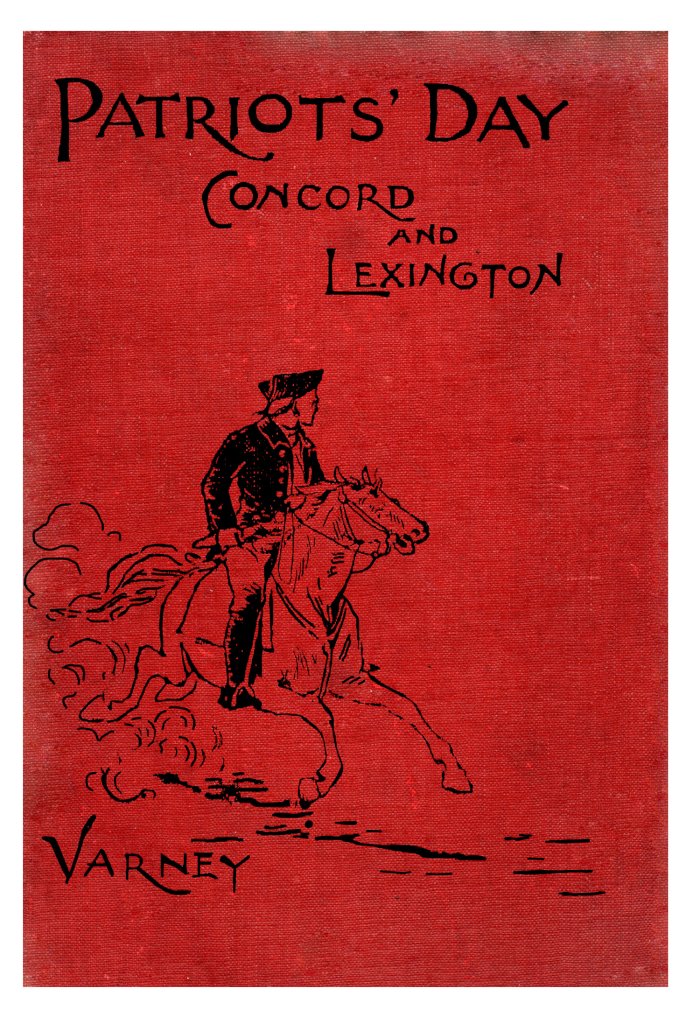
This book is as exact a reproduction of this wonderful little book published in 1895 as we could produce. You will find words spelled and hyphenated the way they are in the original.
Our goal at Battle Road Books is to keep the history of the Revolutionary War alive and vibrant and easily accessible. We also don’t think you should pay an arm and a leg just to read these old books.

Get your Favorite Flag on a coffee mug. Or maybe your favorite Founding Fathers Quote on a travel mug. Custom Orders welcome.
Visit our Sister Site - Revive 1775
YES! You can now sponsor your favorite page on Revolutionary War and Beyond. Click below for information.



Homepage | Newsletter | Causes | Declaration | Bill of Rights | Founders
Facts | Flags | Quotes | Games | Attractions | Documents | Blog | Store | Advertise
 |
|
Privacy | Sitemap | Citations | Contact
Revolutionary War and Beyond © 2008-2019
Facebook Comments