Fifth Amendment Court Cases -
Due Process Clause
Each of these Fifth Amendment Court Cases is somehow significant to the way the Supreme Court has interpreted the Due Process Clause in the Fifth Amendment to the US Constitution. Well, most are significant, some are just interesting!
Fifth Amendment Court Cases - Due Process Clause -
Dred Scott vs. Sandford
One of the most controversial Supreme Court rulings ever was Dred Scott vs. Sandford, 1857. In this case, the Supreme Court ruled that slaves, former slaves and the children of slaves or former slaves could never be citizens of the United States. The Court also said that the United States Congress had no authority to prohibit slavery in United States Territories, that slaves could not sue in court and that slaves could not be taken from their owners without due process. The Court used substantive due process reasoning to come to its conclusion.
The case centered on whether or not Dred Scott, an African American slave became free when his owner took him to a state where slavery was outlawed. Scott contended that he had become a free citizen at that point. The Court declared that the owner's due process rights would be violated if he lost his property (Dred Scott) simply by going into another state and taking his property with him.
Keep in mind also that this was before the 13th Amendment after the Civil War, which granted citizenship to former slaves. The Court ruled that since Dred Scott was not a citizen, he could not viably bring a case in a United States court.

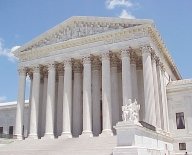 Supreme Court of the United States
Two later Supreme Court justices had very harsh words for the Dred Scott decision. Justice John Marshall Harlan wrote as the lone dissenter to the majority in Plessy vs. Ferguson, 1896, a decision that declared racial segregation was not illegal, that the Plessy decision would:
"Prove to be quite as pernicious as the decision made by this tribunal in the Dred Scott case."
Likewise, Justice Antonin Scalia criticized Dred Scott in his dissenting opinion in Planned Parenthood vs. Casey, 1992. This case had upheld the Roe vs. Wade decision allowing abortions. Justice Scalia said:
"Dred Scott... rested upon the concept of "substantive due process" that the Court praises and employs today. Indeed, Dred Scott was very possibly the first application of substantive due process in the Supreme Court, the original precedent for... Roe v. Wade."
You can read a more in depth article about the Dred Scott case here.
Fifth Amendment Court Cases - Due Process Clause -
Roe vs. Wade
Roe vs. Wade, 1973, utilized substantive due process to declare a Texas law banning abortions unconstitutional. The Court decided that there is a right to privacy guaranteed by the Due Process Clause, referring to the 14th Amendment's Due Process Clause, not the 5th Amendment's Due Process Clause, meaning that it was not fair for the government to tell a woman what she could or could not do regarding her own pregnancy.
Many people have criticized this decision as a huge judicial overreach. This ruling affected laws in 46 states that had various degrees of bans on abortion. Clearly, the majority of the population wanted the practice outlawed, but the Court overruled it.
Fifth Amendment Court Cases - Due Process Clause -Bowers vs. Hardwick
In Bowers vs. Hardwick, 1986, the Supreme Court rejected the use of substantive due process in declaring that certain sexual relations between members of the same sex is not protected by a due process right to privacy. Substantive due process proponents usually say that a behavior is a protected right if it is "deeply rooted in this nation's history or traditions," or if it is "implicit in the concept of ordered liberty." In his majority opinion, Justice Byron White made this statement:
"To claim that a right to engage in such conduct is 'deeply rooted in this Nation's history and tradition' or 'implicit in the concept of ordered liberty' is, at best, facetious."
In this case, the court upheld a Georgia law that outlawed this type of behavior.
Fifth Amendment Court Cases - Due Process Clause -Lawrence vs. Texas
 2008 Supreme Court of the United States
The Supreme Court completely reversed its logic regarding the exact same matter of sexual relations between people of the same sex in a 2003 case called Lawrence vs. Texas. In this case, the substantive due process interests succeeded in overturning a Texas law that also banned this type of behavior.
Part of the Court's reasoning was that a Due Process Clause right to sexual privacy was violated by the law. Of course, there is no "right to privacy" mentioned in the Constitution, but some members of the Court have said that one naturally exists.
Roe vs. Wade and Lawrence vs. Texas both utilized substantive due process principles to overturn laws passed by the majority of the population. Both of these cases rely on the 14th Amendment Due Process Clause, rather than the 5th Amendment Due Process Clause. Both clauses are exactly the same, but the 14th Amendment's Due Process Clause applies to the states, whereas the 5th Amendment's Due Process Clause applies to the federal government. The Dred Scott case utilizes the 5th Amendment Due Process Clause.

Read more about the history and meaning of the Due Process Clause here.
Read more about the history and meaning of the 5th Amendment here.
Learn more about Cases relating to the following Fifth Amendment clauses:
- Fifth Amendment Court Cases - Double Jeopardy Clause
- Fifth Amendment Court Cases - Grand Jury Clause
- Fifth Amendment Court Cases - Grand Jury Exception Clause
- Fifth Amendment Court Cases -The Self-Incrimination Clause
- Fifth Amendment Court Cases - Eminent Domain Clause
Preamble to the Bill of Rights
Learn about the 1st Amendment here.
Learn about the 2nd Amendment here.
Learn about the 3rd Amendment here.
Learn about the 4th Amendment here.
Learn about the 5th Amendment here.
Learn about the 6th Amendment here.
Learn about the 7th Amendment here.
Learn about the 8th Amendment here.
Learn about the 9th Amendment here.
Learn about the 10th Amendment here.
Learn more about the Bill of Rights with the following article:
- Main Bill of Rights page.
- For a brief synopsis of the First Ten Amendments go here.
- Learn about the Purpose of the Bill of Rights here.
- Read about the History of the Bill of Rights here.
- Look at the Bill of Rights in Pictures here.
Like This Page?
© 2008 - 2022 Revolutionary-War-and-Beyond.com Dan & Jax Bubis
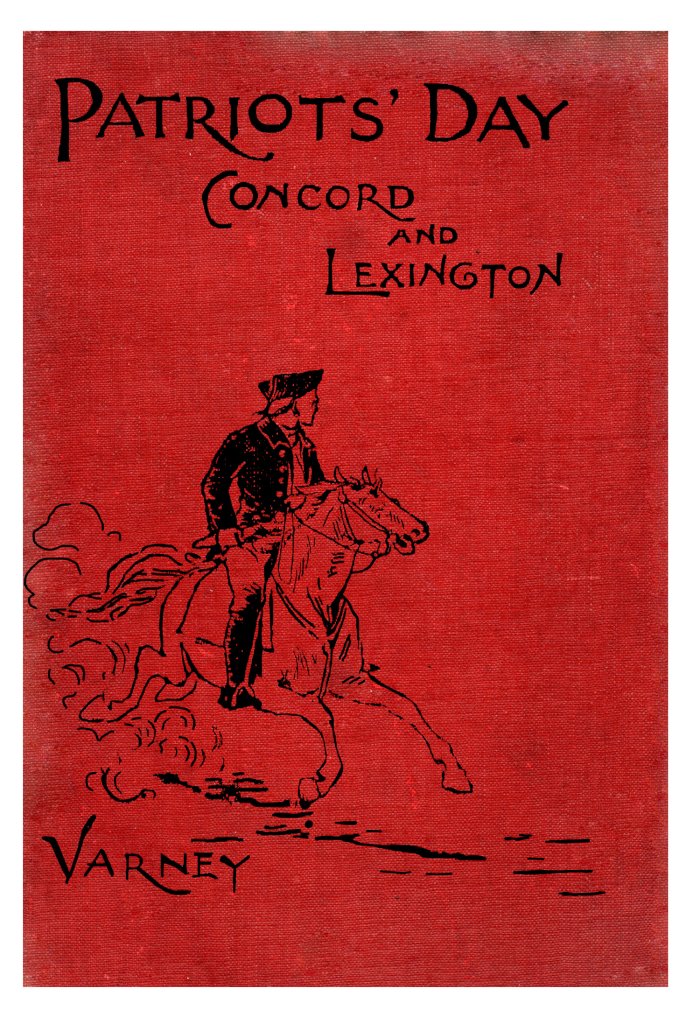
This book is as exact a reproduction of this wonderful little book published in 1895 as we could produce. You will find words spelled and hyphenated the way they are in the original.
Our goal at Battle Road Books is to keep the history of the Revolutionary War alive and vibrant and easily accessible. We also don’t think you should pay an arm and a leg just to read these old books.

Get your Favorite Flag on a coffee mug. Or maybe your favorite Founding Fathers Quote on a travel mug. Custom Orders welcome.
Visit our Sister Site - Revive 1775
YES! You can now sponsor your favorite page on Revolutionary War and Beyond. Click below for information.



Homepage | Newsletter | Causes | Declaration | Bill of Rights | Founders
Facts | Flags | Quotes | Games | Attractions | Documents | Blog | Store | Advertise
 |
|
Privacy | Sitemap | Citations | Contact
Revolutionary War and Beyond © 2008-2019
Facebook Comments