Fifth Amendment Court Cases
The Grand Jury Clause
Each of these Fifth Amendment Court Cases is somehow significant to the way the Supreme Court has interpreted the Grand Jury Clause in the Fifth Amendment to the US Constitution. Well, most are significant, some are just interesting! You can read more about the history and meaning of the Grand Jury Clause here.
Fifth Amendment Court Cases - The Grand Jury Clause -
United States vs. Moreland
You might have wondered what an "infamous" crime is. The 5th Amendment says that people cannot be charged with an "infamous" crime, unless indicted by a grand jury. The Supreme Court ruled in United States vs. Moreland, 1924, that an infamous crime is one in which the punishment for the crime could be a prison sentence. In other words, an infamous crime is committed based on the potential punishment. The actual punishment given is not relevant. You can read the details of the Moreland case here.
Fifth Amendment Court Cases - The Grand Jury Clause -
United States vs. Williams
Many of the procedures that cause the grand jury to be stacked against a witness have been allowed by the Supreme Court. It has always been the tradition that a prosecutor did not have to present all the evidence he had to a grand jury, even if the evidence was favorable to the witness. The Supreme Court confirmed this tradition in United States vs. Williams, 1992, when it said that,
"Because it has always been thought sufficient for the grand jury to hear only the prosecutor's side, and, consequently that the suspect has no right to present, and the grand jury no obligation to consider, exculpatory evidence, it would be incompatible with the traditional system to impose upon the prosecutor a legal obligation to present such evidence."

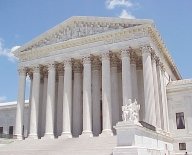
Fifth Amendment Court Cases - The Grand Jury Clause -
Costello vs. United States
The Supreme Court also ruled that hearsay evidence that would not be admissible to a trial jury, can be allowed in a grand jury. In Costello vs. United States, 1956, the Court stated that "an indictment returned by a legally constituted and unbiased grand jury, ...if valid on its face, is enough to call for a trial on the merits. The Fifth Amendment requires nothing more."
The Courts reasoning was stated as follows: "No persuasive reasons are advanced for establishing such a rule. It would run counter to the whole history of the grand jury institution, in which laymen conduct their inquiries unfettered by technical rules. Neither justice nor the concept of a fair trial requires such a change."
Read more about the history and meaning of the Grand Jury Clause here.
Read more about the history and meaning of the 5th Amendment here.
Learn more about Cases relating to the following Fifth Amendment clauses:
- Fifth Amendment Court Cases - Double Jeopardy Clause
- Fifth Amendment Court Cases - Due Process Clause
- Fifth Amendment Court Cases - Grand Jury Exception Clause
- Fifth Amendment Court Cases -The Self-Incrimination Clause
- Fifth Amendment Court Cases - Eminent Domain Clause
Preamble to the Bill of Rights
Learn about the 1st Amendment here.
Learn about the 2nd Amendment here.
Learn about the 3rd Amendment here.
Learn about the 4th Amendment here.
Learn about the 5th Amendment here.
Learn about the 6th Amendment here.
Learn about the 7th Amendment here.
Learn about the 8th Amendment here.
Learn about the 9th Amendment here.
Learn about the 10th Amendment here.
Learn more about the Bill of Rights with the following articles:
- Main Bill of Rights page.
- For a brief synopsis of the First Ten Amendments go here.
- Learn about the Purpose of the Bill of Rights here.
- Read about the History of the Bill of Rights here.
- Look at the Bill of Rights in Pictures here.
Revolutionary War and Beyond Home
Like This Page?
© 2008 - 2022 Revolutionary-War-and-Beyond.com Dan & Jax Bubis
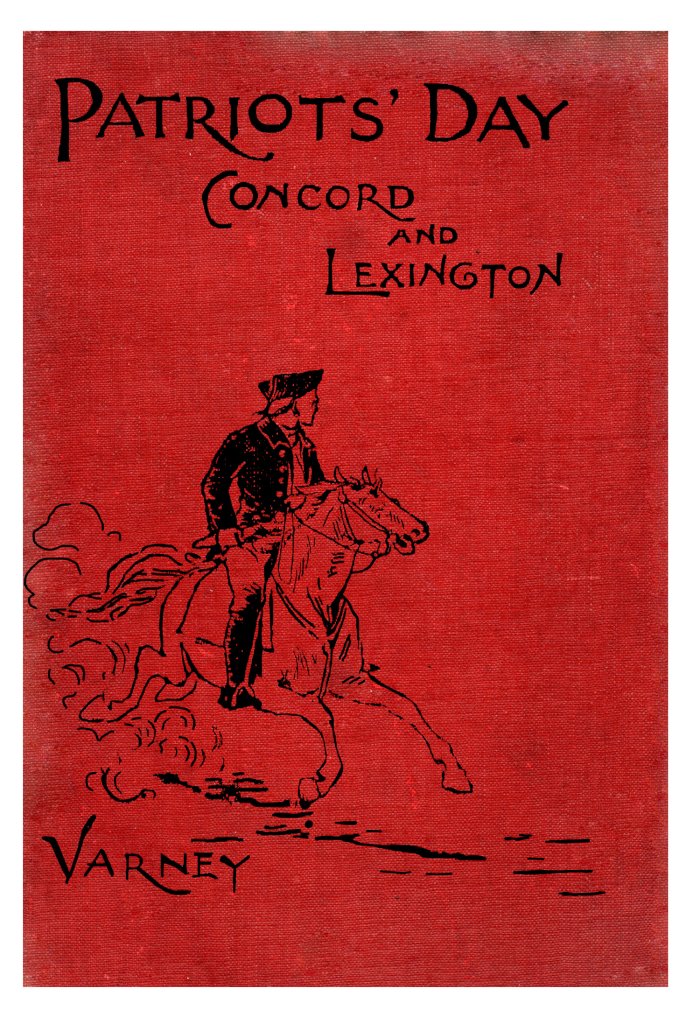
This book is as exact a reproduction of this wonderful little book published in 1895 as we could produce. You will find words spelled and hyphenated the way they are in the original.
Our goal at Battle Road Books is to keep the history of the Revolutionary War alive and vibrant and easily accessible. We also don’t think you should pay an arm and a leg just to read these old books.
Get your Favorite Flag on a coffee mug. Or maybe your favorite Founding Fathers Quote on a travel mug. Custom Orders welcome.
Visit our Sister Site - Revive 1775
YES! You can now sponsor your favorite page on Revolutionary War and Beyond. Click below for information.



Homepage | Newsletter | Causes | Declaration | Bill of Rights | Founders
Facts | Flags | Quotes | Games | Attractions | Documents | Blog | Store | Advertise
 |
|
Privacy | Sitemap | Citations | Contact
Revolutionary War and Beyond © 2008-2019
Facebook Comments