Famous Quotes
by George Washington
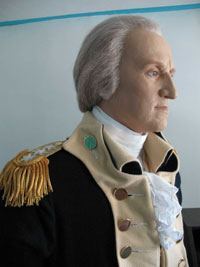
Read these Famous Quotes by George Washington from his own letters, diaries and speeches. Learn the wisdom that made this American Patriot such a hero. Each of these Famous Quotes by George Washington is listed in chronological order with links to more at the bottom of the page.
Check out our George Washington Facts page here.


"Let us with caution indulge the supposition, that morality can be maintained without religion. Whatever may be conceded to the influence of refined education on minds of peculiar structure, reason and experience both forbid us to expect, that national morality can prevail in exclusion of religious principle." - Farewell Address, September 19, 1796
"It is substantially true, that virtue or morality is a necessary spring of popular government. The rule, indeed, extends with more or less force to every species of free government." - Farewell Address, September 19, 1796
"Promote, then, as an object of primary importance, institutions for the general diffusion of knowledge. In proportion as the structure of a government gives force to public opinion, it is essential that public opinion should be enlightened." - Farewell Address, September 19, 1796
"As a very important source of strength and security, cherish public credit. One method of preserving it is, to use it as sparingly as possible; avoiding occasions of expense by cultivating peace, but remembering also that timely disbursements to prepare for danger frequently prevent much greater disbursements to repel it; avoiding likewise the accumulation of debt, not only by shunning occasions of expense, but by vigorous exertions in time of peace to discharge the debts, which unavoidable wars may have occasioned, not ungenerously throwing upon posterity the burthen, which we ourselves ought to bear." - Farewell Address, September 19, 1796
"Observe good faith and justice towards all Nations; cultivate peace and harmony with all. Religion and Morality enjoin this conduct; and can it be, that good policy does not equally enjoin it? It will be worthy of a free, enlightened, and, at no distant period, a great Nation, to give to mankind the magnanimous and too novel example of a people always guided by an exalted justice and benevolence. Who can doubt, that, in the course of time and things, the fruits of such a plan would richly repay any temporary advantages, which might be lost by a steady adherence to it? Can it be, that Providence has not connected the permanent felicity of a Nation with its Virtue?" - Farewell Address, September 19, 1796
"Nothing is more essential, than that permanent, inveterate antipathies against particular Nations, and passionate attachments for others, should be excluded; and that, in place of them, just and amicable feelings towards all should be cultivated. The Nation, which indulges towards another an habitual hatred, or an habitual fondness, is in some degree a slave. It is a slave to its animosity or to its affection, either of which is sufficient to lead it astray from its duty and its interest. Antipathy in one nation against another disposes each more readily to offer insult and injury, to lay hold of slight causes of umbrage, and to be haughty and intractable, when accidental or trifling occasions of dispute occur. Hence frequent collisions, obstinate, envenomed, and bloody contests." - Farewell Address, September 19, 1796
"The great rule of conduct for us, in regard to foreign nations, is, in extending our commercial relations, to have with them as little political connexion as possible. So far as we have already formed engagements, let them be fulfilled with perfect good faith. Here let us stop." - Farewell Address, September 19, 1796
"Tis our true policy to steer clear of permanent alliances with any portion of the foreign world; so far, I mean, as we are now at liberty to do it; for let me not be understood as capable of patronizing infidelity to existing engagements. I hold the maxim no less applicable to public than to private affairs, that honesty is always the best policy. I repeat it, therefore, let those engagements be observed in their genuine sense. But, in my opinion, it is unnecessary and would be unwise to extend them." - Farewell Address, September 19, 1796
"In offering to you, my countrymen, these counsels of an old and affectionate friend, I dare not hope they will make the strong and lasting impression I could wish; that they will control the usual current of the passions, or prevent our nation from running the course, which has hitherto marked the destiny of nations. But, if I may even flatter myself, that they may be productive of some partial benefit, some occasional good; that they may now and then recur to moderate the fury of party spirit, to warn against the mischiefs of foreign intrigue, to guard against the impostures of pretended patriotism; this hope will be a full recompense for the solicitude for your welfare, by which they have been dictated." - Farewell Address, September 19, 1796
"The duty of holding a neutral conduct may be inferred, without any thing more, from the obligation which justice and humanity impose on every nation, in cases in which it is free to act, to maintain inviolate the relations of peace and amity towards other nations." - Farewell Address, September 19, 1796
"Though, in reviewing the incidents of my administration, I am unconscious of intentional error, I am nevertheless too sensible of my defects not to think it probable that I may have committed many errors. Whatever they may be, I fervently beseech the Almighty to avert or mitigate the evils to which they may tend. I shall also carry with me the hope, that my Country will never cease to view them with indulgence; and that, after forty-five years of my life dedicated to its service with an upright zeal, the faults of incompetent abilities will be consigned to oblivion, as myself must soon be to the mansions of rest." - Farewell Address, September 19, 1796
"Light reading, by this, I mean books of little importance, may amuse for the moment, but leaves nothing solid behind." - Letter to George Washington Parke Custis, November 13, 1796
"Never let an indigent person ask, without receiving something, if you have the means." - Letter to George Washington Parke Custis, November 13, 1796
"It is at all times more easy to make enemies than friends." - Letter to George Washington Parke Custis, November 28, 1796
"To speak evil of any one, unless there is unequivocal proofs of their deserving it, is an injury for which there is no adequate reparation." - Letter to George Washington Parke Custis, November 28, 1796
"To acknowledge the receipt of letters is always proper, to remove doubts of their miscarriage." - Letter to George Washington Parke Custis, November 28, 1796
"You are now extending into that stage of life when good or bad habits are formed. When the mind will be turned to things useful and praiseworthy, or to dissipation and vice. Fix on whichever it may, it will stick by you; for you know it has been said, and truly, "that as the twig is bent so it will grow." This, in a strong point of view, shows the propriety of letting your inexperience be directed by maturer advice, and in placing guard upon the avenues which lead to idleness and vice. The latter will approach like a thief, working upon your passions: encouraged, perhaps by bad examples: the propensity to which will increase in proportion to the practice of it and your yielding. This admonition proceeds from the purest affection for you: but I do not mean by it, that you are to become a stoic, or to deprive yourself in the intervals of study of any recreations or manly exercise which reason approves." - Letter to George Washington Parke Custis, November 28, 1796
"Select the most deserving only for your friendships, and before this becomes intimate, weigh their dispositions and character well. True friendship is a plant of slow growth; to be sincere, there must be a congeniality of temper and pursuits. Virtue and vice can not be allied; nor can idleness and industry..." - Letter to George Washington Parke Custis, November 28, 1796
"The assurances you give me of applying diligently to your studies, and fulfilling those obligations which are enjoined by your Creator and due to his creatures, are highly pleasing and satisfactory to me." - Letter to George Washington Parke Custis, November 28, 1796
"In a republic, what species of knowledge can be equally important, and what duty more pressing on its legislature, than to patronize a plan for communicating it to those who are to be the future guardians of the liberties of the country?" - Speech in the United States Congress, December 7, 1796
"The art of war is at once comprehensive and complicated... it demands much previous study and... the possession of it, in its most improved and perfect state, is always a great moment to the security of a nation. This, therefore, ought to be a serious care of every government; and for this purpose, an academy, where a regular course of instruction is given, is an obvious expedient, which different nations have successfully employed." - Speech in the United States Congress, December 7, 1796
"The situation in which I now stand, for the last time, in the midst of the Representatives of the People of the United States, naturally recalls the period when the Administration of the present form of Government commenced; and I cannot omit the occasion, to congratulate you and my Country, on the success of the experiment; nor to repeat my fervent supplications to the Supreme Ruler of the Universe, and Sovereign Arbiter of Nations, that his Providential care may still be extended to the United States; that the virtue and happiness of the People, may be preserved; and that the Government, which they have instituted, for the protection of their liberties, may be perpetual." - Eighth Annual Message to Congress, December 7, 1796
"It is with peculiar satisfaction I can say, that, prompted by a high sense of duty in my attendance on public worship, I have been gratified, during my residence among you, by the liberal and interesting discourses which have been delivered in your Churches." - Letter to the United Episcopal Churches of Christ Church and St. Peter's, March 2, 1797
"Believing as I do, that Religion and Morality are the essential pillars of civil society, I view, with unspeakable pleasure, that harmony and brotherly love which characterizes the Clergy of different denominations, as well in this, as in other parts of the United States; exhibiting to the world a new and interesting spectacle, at once the pride of our country and the surest basis of Universal Harmony." - Letter to the Clergy of Philadelphia, March 3, 1797
"As for myself I am now seated in the shade of my Vine and Fig tree, and altho' I look with regret on many transactions which do not comport with my ideas, I shall, notwithstanding "view them in the calm lights of mild philosophy," persuaded, if any great crisis should occur, to require it, that the good sense and Spirit of the Major part of the people of this country, will direct them properly." - Letter to Charles Cotesworth Pinckney, June 24, 1797
- Read more about George Washington at our George Washington Facts page here.
Go to George Washington Quote page 1 2 3
Go to George Washington Quote page 4 5 6
Go to George Washington Quote page 7 8 9
Go to George Washington Quote page 10 12 13
Go to George Washington Quote page 14 15 16
Go to George Washington Quote page 17 18 19 20
If you enjoyed the George Washington Quote page, check out these inspirational quotes from some other Founding Fathers
Revolutionary War and Beyond Home
Like This Page?
© 2008 - 2022 Revolutionary-War-and-Beyond.com Dan & Jax Bubis
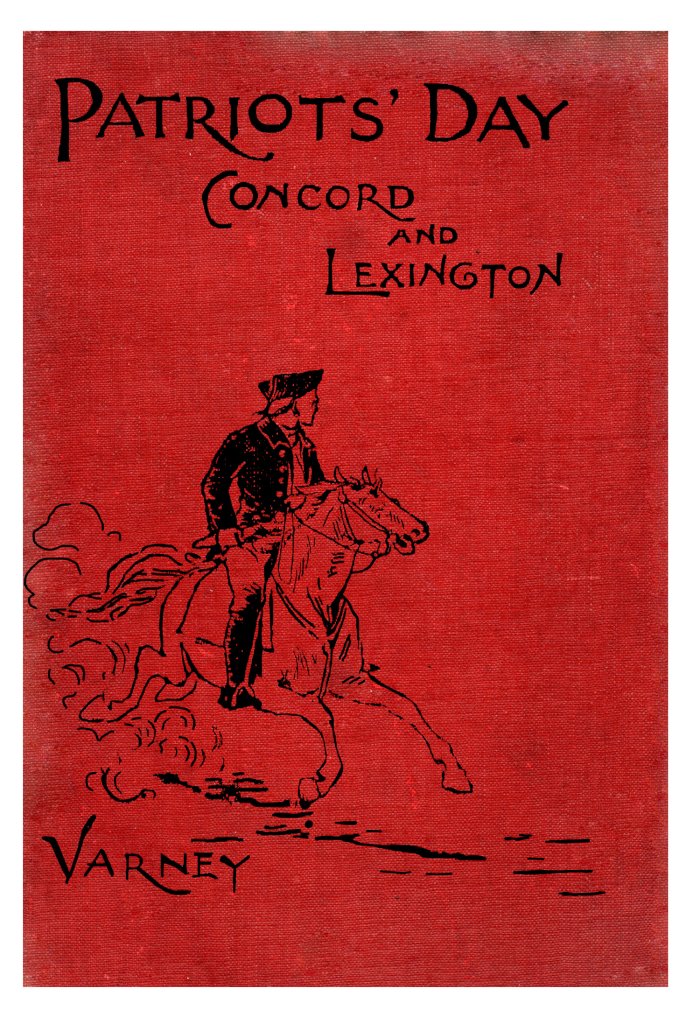
This book is as exact a reproduction of this wonderful little book published in 1895 as we could produce. You will find words spelled and hyphenated the way they are in the original.
Our goal at Battle Road Books is to keep the history of the Revolutionary War alive and vibrant and easily accessible. We also don’t think you should pay an arm and a leg just to read these old books.

Get your Favorite Flag on a coffee mug. Or maybe your favorite Founding Fathers Quote on a travel mug. Custom Orders welcome.

Visit our Sister Site - Revive 1775

YES! You can now sponsor your favorite page on Revolutionary War and Beyond. Click below for information.



Homepage | Newsletter | Causes | Declaration | Bill of Rights | Founders
Facts | Flags | Quotes | Games | Attractions | Documents | Blog | Store | Advertise
 |
|
Privacy | Sitemap | Citations | Contact
Revolutionary War and Beyond © 2008-2019
Facebook Comments